



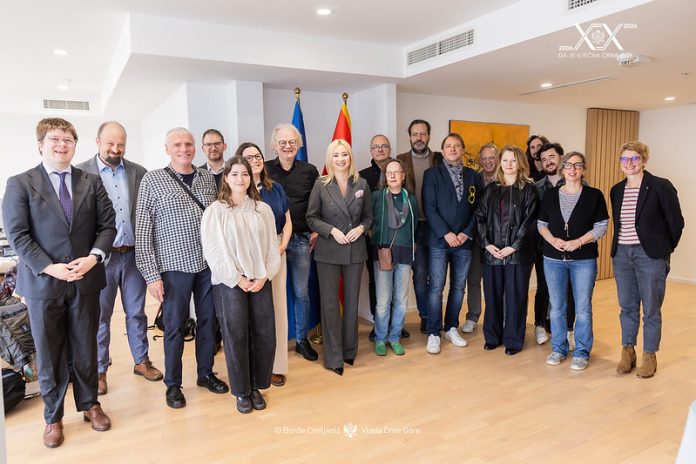

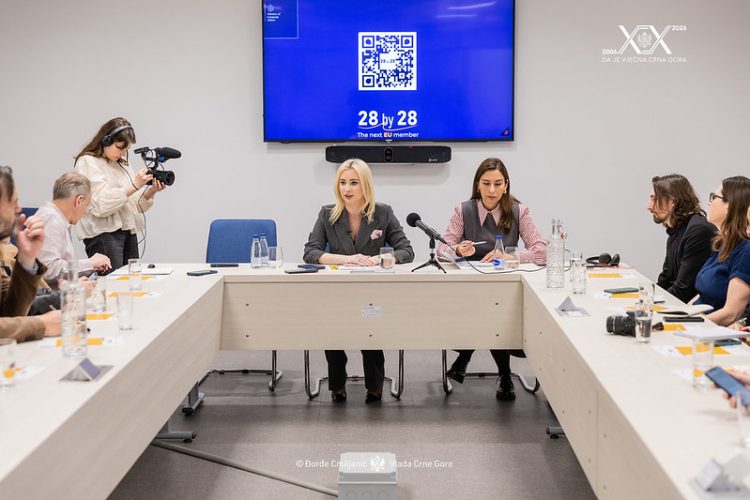
Minister of European Affairs Maida Gorčević met with a group of journalists from seven European Union member states as part of their visit to Montenegro. On that occasion, the key results of European integration, the pace of reforms, and priorities in the final phase of the accession process were presented.
Gorčević emphasized that Montenegro is entering the most intensive and most demanding phase of negotiations, with a clear political commitment to full membership in the European Union.
“Montenegro remains fully committed and clearly oriented toward the European path, with the ambition to become the next member of the European Union. Our goal is not only membership, but to demonstrate through comprehensive reforms concrete, measurable, and long-term sustainable results that confirm our readiness for full membership,” the minister said.
She recalled that since 2023, a strong political and reform shift has been made.
“Today there is a clear political will and a full focus on results. The European path is no longer declarative; it is being implemented through concrete changes in institutions and the legislative framework,” Gorčević stated.
She stressed that closing negotiation chapters represents a substantive transformation of the state, not a technical administrative step.
“Closing chapters means strengthening institutions, a stable economy, and a functional system that delivers direct benefits to citizens,” she said, adding that Montenegro’s goal is to become the 28th member of the European Union by 2028.
Responding to a question about the course and nature of the process, the minister explained that European integration is based on three key pillars: aligning legislation with the EU acquis, strengthening infrastructure, and developing administrative capacities.
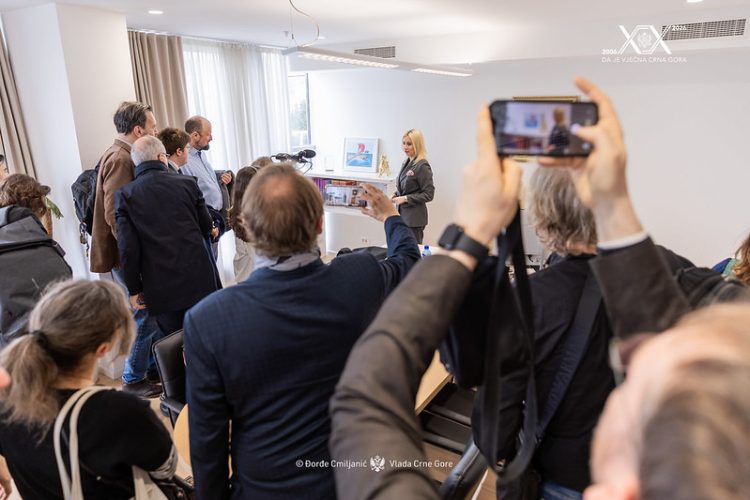
“We are aligning all laws and strategies with European rules, with continuous support from experts from member states. At the same time, we are investing in infrastructure and institutions, but also in people, because without a professional and capable administration there is no successful integration,” Gorčević said, noting that Montenegro consistently adopts and implements best European practices in this process.
Journalists were also interested in the importance of local self-governments in implementing reforms, given that most European policies are carried out at the municipal level.
“About 70 percent of European policies are implemented at the local level. That is why we are working intensively with municipalities through training, expert support, and preparation for the use of EU funds. The readiness of local self-governments is key to the credibility of the entire European integration process,” she said.
Gorčević also emphasized that Montenegro does not see itself only as a future member of the European Union, but as a country that already contributes to the stability and credibility of the enlargement policy.
“We see Montenegro as a strategic bridge between the Western Balkans and the European Union, but also as a reliable partner that contributes to regional stability and the credibility of the enlargement policy. Our goal is not only membership, but active participation and responsibility in European processes,” Gorčević stated.
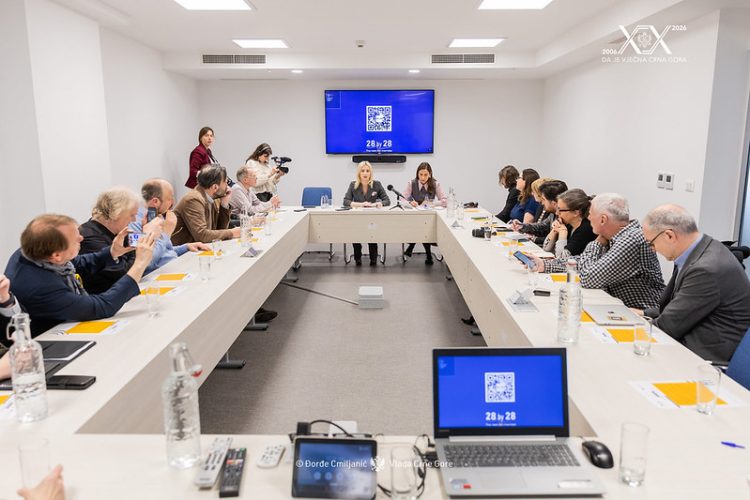
During the discussion with journalists, they showed particular interest in key aspects of Montenegro’s European path, including reforms in the rule of law, strengthening institutions, the functioning of the judiciary, the fight against corruption, as well as the economic effects of integration and further integration into the single European market.
She concluded that Montenegro remains firmly committed to a consistent approach to integration.
“We do not want shortcuts; we want to meet all the criteria and enter the European Union as a prepared and equal state,” Gorčević said.
MINISTRY OF EUROPEAN AFFAIRS