




The Adventure Park was officially opened in Plužine today, and the Integrated Strategy for the Development of the Sustainable Tourism Destination Foča–Plužine 2026–2030 was presented as part of the cross-border cooperation project “Tourism, Adrenaline and Rafting Adventure v.2.0 – T.A.R.A v.2.0”, financed by the European Union.
The event confirmed the partners’ joint commitment in Plužine and Foča to connecting their tourism offers through cross-border cooperation, improving infrastructure and services, and jointly developing a destination based on natural potential and active tourism.
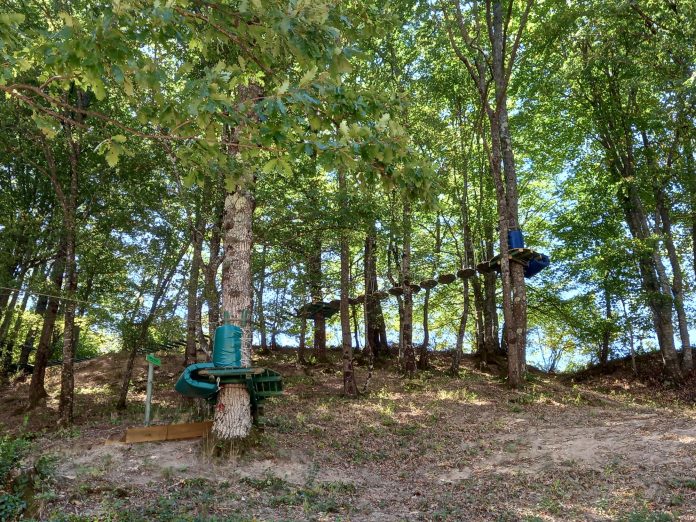
With the opening of the Adventure Park, Plužine has gained a new facility intended for lovers of active recreation, nature and adrenaline activities. The park was designed as a space for different categories of visitors and represents a significant contribution to improving the tourism offer of the cross-border area and developing active tourism.

The ceremony brought together representatives of local and national institutions, the European Union, the tourism sector, as well as partners and stakeholders involved in developing the Foča–Plužine cross-border tourism destination.
Opening today’s programme, President of the Municipality of Plužine Slobodan Delić stressed the importance of continuing the joint work of Foča and Plužine on developing the tourism offer.
“Today is an important day for Plužine, but also for our joint tourism story with Foča. By opening the Adventure Park, we are further enriching the tourism offer and creating a new facility for visitors. We are particularly pleased that this is already the third joint project between Foča and Plužine, which confirms that our partnership is delivering concrete results. We thank the European Union for its support, which through projects like this contributes to the development of the tourism offer and the connection of our local communities. I believe this will encourage new joint projects and further position Foča and Plužine as a single tourism destination,” Delić said.
Deputy Mayor of the Municipality of Foča Vesna Rašević also reflected on the importance of the long-standing cooperation, stressing that joint projects contribute not only to connecting the two destinations, but also to creating concrete facilities and new opportunities for the local economy.

“For years, Foča and Plužine have been showing that by working together we can create a more concrete and higher-quality tourism offer. It is particularly important to us that through our projects we not only connect two destinations, but also create facilities that can extend guests’ stays and contribute to the development of the local economy. The Adventure Park in Plužine is another example of this approach, and we are pleased that it will become part of the joint tourism offer of Foča and Plužine,” Rašević said.
The Integrated Strategy for the Development of the Sustainable Tourism Destination Foča–Plužine 2026–2030 was also presented at the event. The document establishes a joint framework for tourism development in the two local communities. The vision of the Strategy is for Foča and Plužine to become an internationally recognised integrated cross-border destination for active and sustainable tourism.
The Strategy defines four strategic priorities: developing an integrated and recognisable cross-border destination; improving tourism infrastructure, accessibility and quality of services; developing and connecting the tourism offers of the two municipalities; and strengthening visitor safety and risk management systems. Particular emphasis is placed on nature protection, the involvement of the local community and the digital visibility of the destination, while the Strategy also includes an action plan for the next five-year period.
Speaking about the importance of the project and European Union support, Territorial Cooperation Programme Manager at the Delegation of the European Union to Montenegro Melanie Bride stressed that projects such as this represent a concrete and visible contribution to local communities.
“For the European Union, this project represents precisely what we provide support for – a concrete and visible impact of our investments on citizens and local communities. European integration is not only a matter of negotiations and policies, but also of real projects that improve the tourism offer, attract visitors and bring new energy to local communities. We are pleased to witness the good use of European Union funds and proud to have supported the implementation of this project,” Bride said.
Programme Manager at the Delegation of the European Union to Bosnia and Herzegovina Edbera Biković particularly highlighted the contribution of the partners from Plužine and Foča, stressing the importance of cross-border cooperation in valorising the natural and cultural potential of the area.

“The partners from Plužine and Foča made a particular contribution to the implementation of the project, and their joint work, creativity and dedication made it possible to improve tourism facilities and attractions, benefiting both the local population and visitors. The European Union is committed to supporting the Western Balkan countries in valorising their cultural heritage and natural potential, and cross-border cooperation plays a particularly important role in this, as it opens up opportunities for connecting and developing joint tourism products. This project is precisely an example of such cooperation,” Biković said.
Following the ceremonial ribbon-cutting, guests toured the park, accompanied by a presentation of its facilities and adventure routes.
The Adventure Park was built as part of the T.A.R.A v.2.0 project, implemented by the Municipality of Plužine, the Municipality of Foča, Piva Nature Park and the Tourist Organisation of the Municipality of Foča, with financial support from the European Union through the IPA III Cross-Border Cooperation Programme Bosnia and Herzegovina – Montenegro 2021–2027. The project implementation began on 1 December 2024 and will run until 30 November 2026. The total value of the project is approximately €530,000, of which the European Union’s contribution amounts to €447,200.