



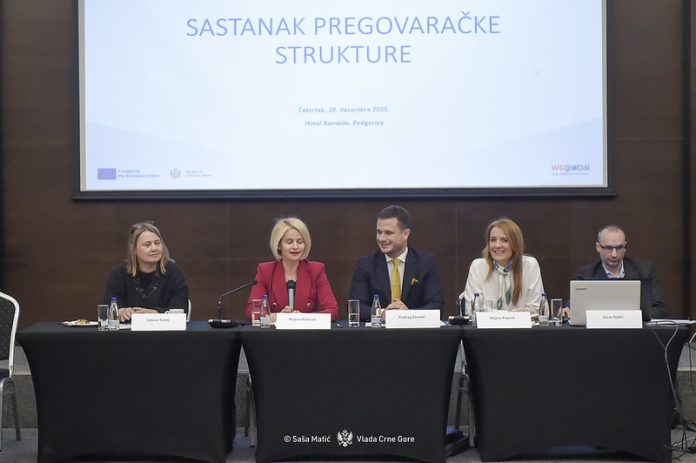

The provisional closure of five negotiation chapters is a success for the EU enlargement policy, not just for Montenegro, assessed Montenegro’s chief negotiator with the EU, Predrag Zenović, at a meeting of the negotiating structure organized by the Ministry of European Affairs with the support of the Center for Strategic Consulting for Montenegro (PLAC), funded by the European Union.
“The success in the provisional closure of the chapters is the result of strong teamwork within the negotiating structure and administration, which has shown it has the capacity to respond to the complex technical and political demands of the process,” Zenović said, praising the members of the negotiating structure from chapters 3, 4, 6, 11, and 13, as well as other officials whose work contributed to this significant achievement.
He reminded that the closure of chapters does not mark the end of the reform process but enters a more demanding phase, where special focus is placed on the sustainability and credibility of implemented reforms.
“With the closure of chapters, we enter a phase in which we must demonstrate sustainability, credibility, and the real ability to implement the obligations we have undertaken,” Zenović stated.
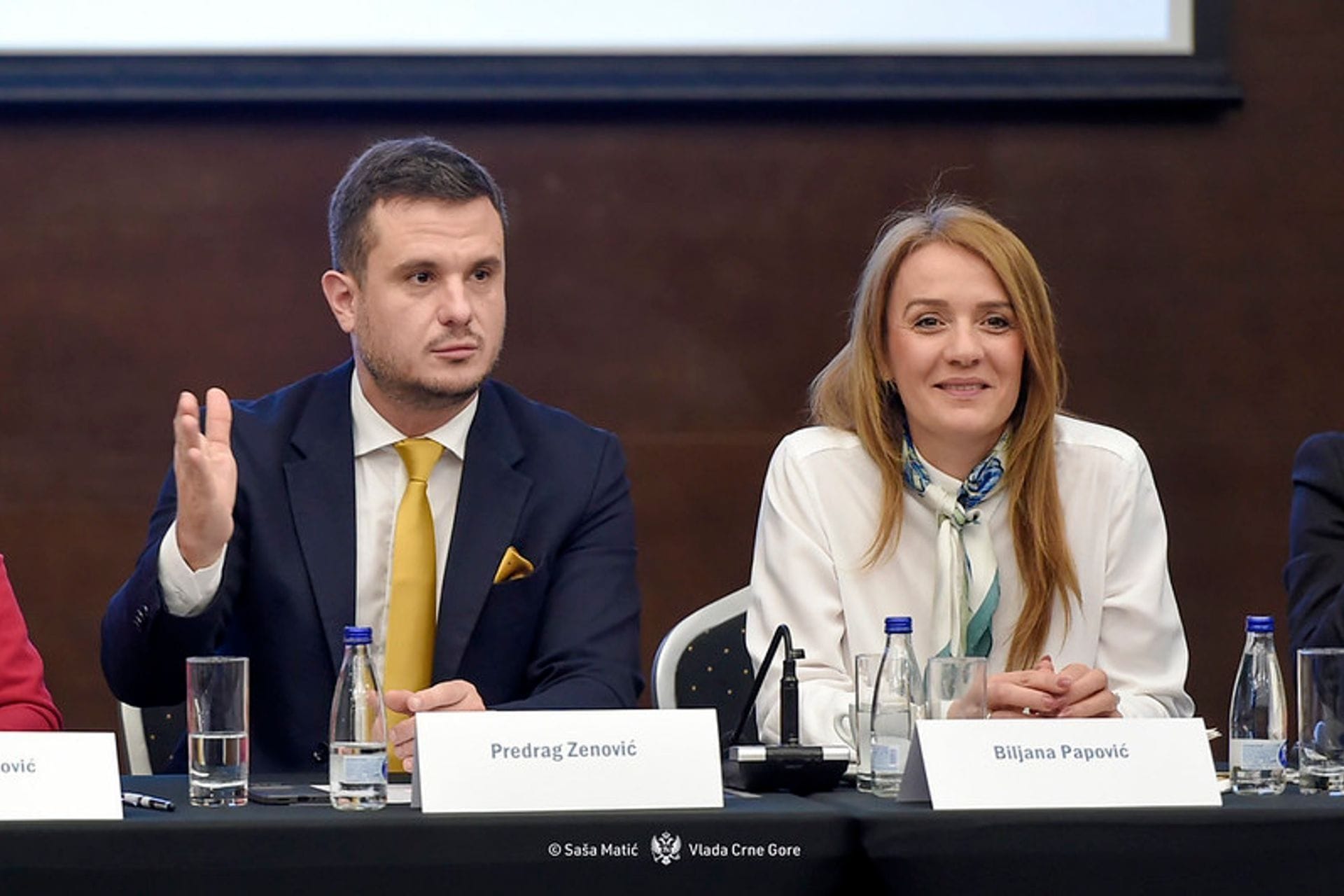
The chief negotiator emphasized that success is not measured solely by the pace of chapter closures, but by the ability to maintain and advance the achieved level of reforms over time.
“The monitoring phases represent a test of the maturity of the negotiating process and the trust that Montenegro can function as a future member state of the European Union,” Zenović said.
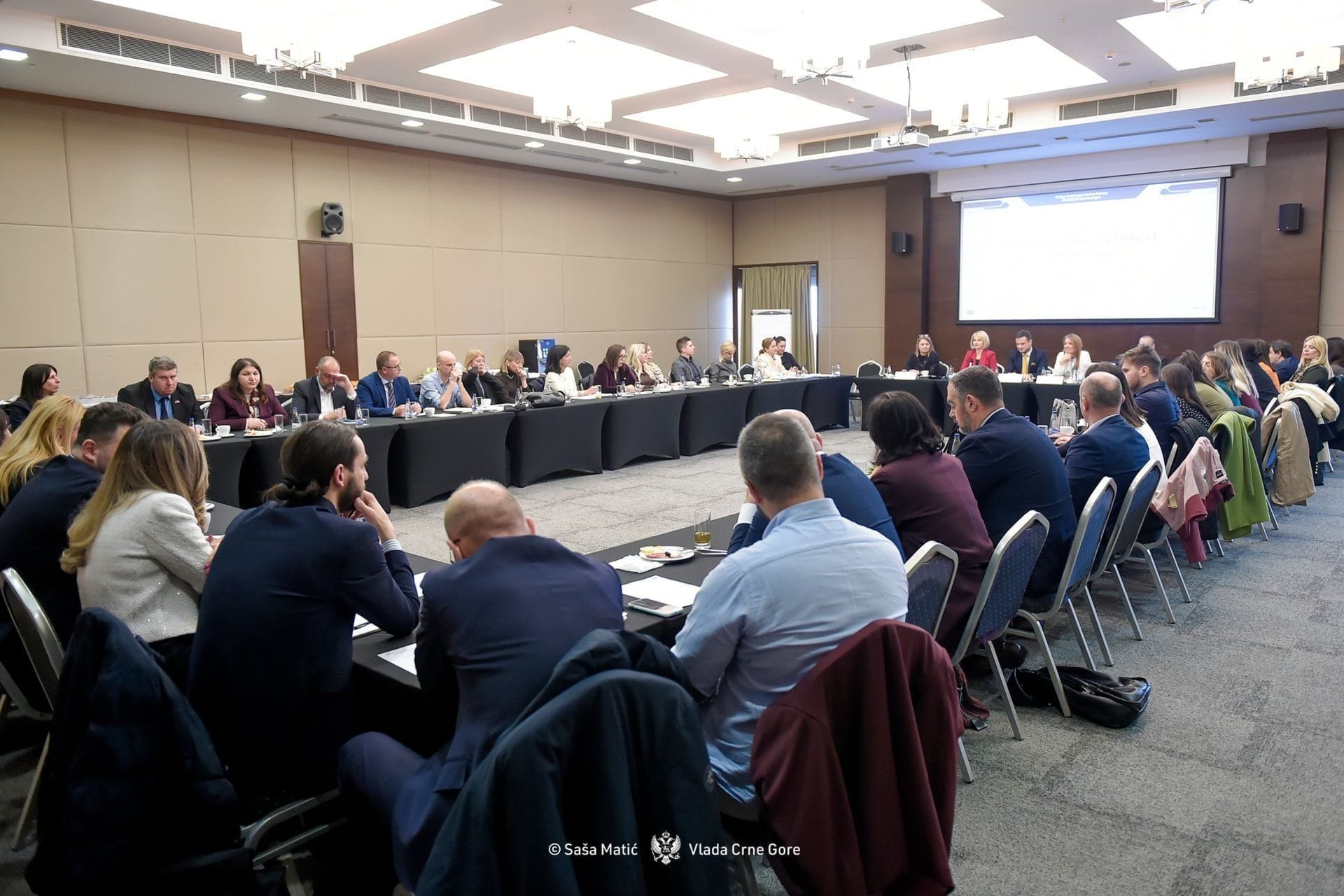
According to him, Montenegro faces the most demanding year in the negotiation process and he called on members of the negotiating structure to give their maximum contribution to successfully close the remaining 20 chapters.
“The process is both technical and political, and as such requires a high level of coordination, clearly defined priorities, and a shared understanding of goals, especially considering the set timeline and obligations for the upcoming period, including plans for 2026, when we expect to close all negotiation chapters,” Zenović emphasized.
At the meeting, attended by the state secretaries of the Ministry of European Affairs, Bojana Bošković and Biljana Papović, key achievements were discussed, progress in the chapters analyzed, and common challenges identified.
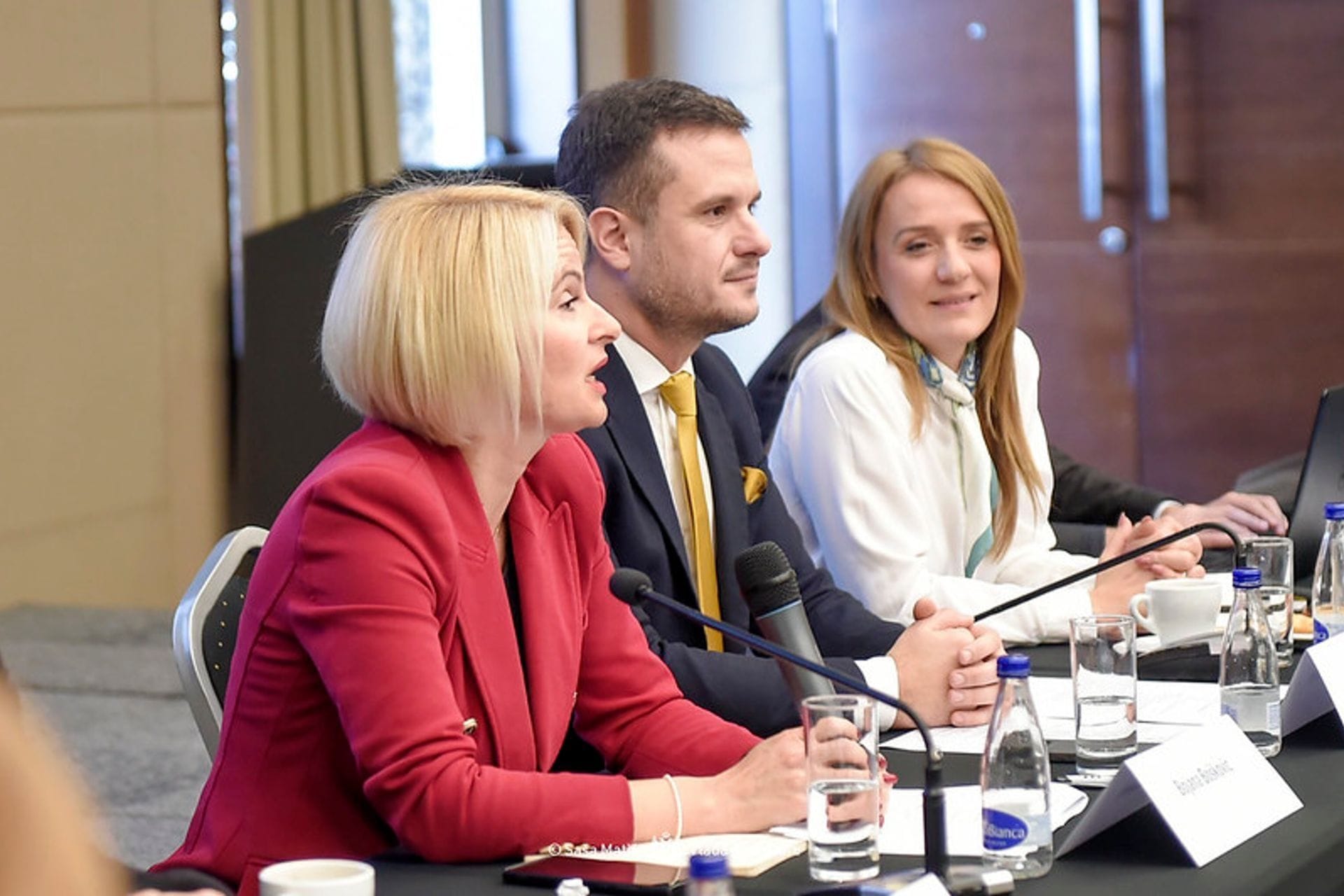
One of the key challenges identified is strengthening administrative capacities, particularly in chapters where obligations are complex and long-term. It was noted that plans must be realistic and sustainable, based on the actual capacities of institutions, to avoid the risk of formally meeting criteria without substantive implementation in practice.
Representatives from chapters 3, 4, 6, 11, and 13, who participated in the Intergovernmental Conference in Brussels where the decision on the provisional closure of these chapters was made, shared their experiences. They expressed satisfaction with both the process and the outcome of the conference, emphasizing that the work and results of Montenegro’s negotiating structure were recognized and positively evaluated by EU institutions, with clear praise for professionalism, preparedness, and achieved results. This, they noted, provided additional motivation to continue intensive work in the next period, maintain the achieved level of progress, and responsibly respond to the monitoring phase requirements.
Zenović concluded that in the next phase it is necessary to think as a member state of the European Union, with strong teamwork. He emphasized that the accession process is both technical and political, and that clear communication is key, as its absence can raise doubts among member states, especially given that while the vision is shared, perspectives are not always the same.