




In the Intergovernmental Conference in June Montenegro temporarily closed Chapter 2
Chapters 1 and 2 that refer to the freedom of movement of goods and workers, open the huge European market for Montenegro, where domestic products will be more competitive, while Montenegrin citizens will be able to exercise all labour rights without any possibility to be discriminated against based on their citizenship.
Head of the negotiation work group for Chapter 1 Dragan Vukčević explains that this chapter includes all goods – industrial and agricultural, while a simple interpretation of the Freedom of movement of goods is access to the common market of the European Union (EU).
„In other words, whatever we produce here, if it meets the requirements defined in Chapter 1, can be put into the common market of the EU without additional customs or any other obstacles“, says Vukčević.
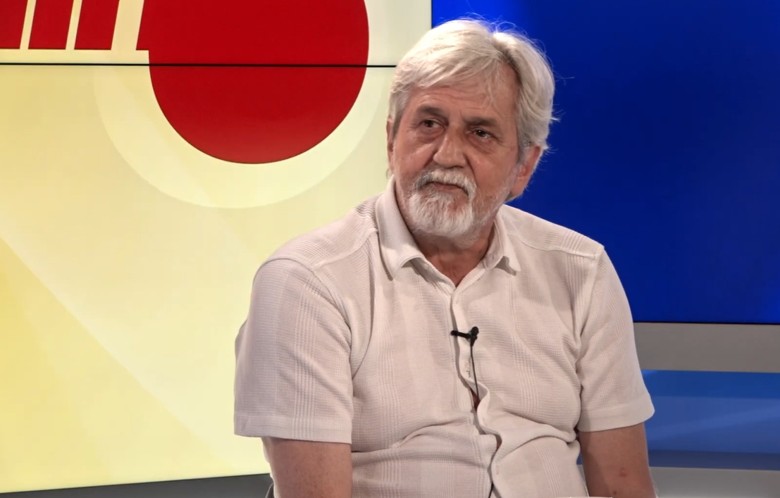
He emphasizes that Montenegro, that has about 620 thousand citizens, is to be present in the market of 500 million people.
„Our general economic policy is that we must diversify our economy, join other members states and have one share of economic growth in industrial production. Therefore, this chapter is of key importance,“ says Vukčević, emphasizing that Chapter 1 does not give any gifts, but gives us an opportunity to apply structured development using domestic and foreign investment, to develop the industrial part of Montenegro that is currently clearly insufficient.
Freedom of movement of goods is one of the four fundamental freedoms that ensure efficient functioning of the internal EU market. As the foundation of the single EU market, the principle of the free movement of goods means removing all trade barriers between Member States, which ensures free circulation of goods within the entire EU.
Head of the Negotiation Work Group for Chapter 2, Ivana Šućur, says that the freedom of movement of workers is one of the four fundamental freedoms within the EU and that it makes this chapter exceptionally important. In its essence, it represents the idea behind creation of the EU which was based on exercising the four freedoms.
Freedom of movement of workers is one of the fundamental principles of the EU which constitutes the key component of the four freedoms of the Union’s internal market. It additionally emphasizes how important it is to have connections between labour market and strengthening of economic integration. This right includes the freedom of movement and residence during employment in another Member State; rights from all branches of social insurance, like pension and health insurance and insurance in case of unemployment and rights to family income.
Talking about the benefits of this chapter, Šućur underlined that the citizens of Montenegro would be able to exercise the same rights to employment and all the rights based on labour within every Member State, without possibility to be discriminated against based on their citizenship. She explained that, in practice, that meant exercising rights to pension and disability insurance, health insurance and coordination of social benefits.
She says that Montenegro met all the formal criteria defined in the 2017 Common Negotiation Position already in February, but that, due to complexity of this chapter, the negotiation position was considered for two months in the Council of the EU.
According to her, in addition to Montenegrin citizens living and working in Montenegro, exceptional benefits of this chapter and implementation of the policies will be strongly felt by Montenegrin citizen who already work and have residence in some other Member States.
Talking about the benefits for citizens, companies and the state coming from Chapter 1, Vukčević says that, at that moment, there are 15 products from Montenegro that have been exported already for many years to the common market of the EU and that comply with all the Directives and Regulations. Adoption, i.e. transposition of those Directive and Regulations into our law will make their work and access much easier.
„We are also creating motives for opening of new production capacities that will rely on the important requirements that have been aligned so far and have products acceptable in the common EU market. This brings us a level of competitiveness that the countries that are not members of the EU do not have,“ says Vučkević underlining that there is another important benefit – all the products offered in our market are safe.
Vukčević thinks that a system should be created and focus put on trainings and contacts with the real market, citizens and economy, because that is an imperative in this short period of time before accession.
As for the benefits to be achieved through Chapter 2, Šućur says that citizens will have access to all vacant positions within the EU and that they are preparing the Employment Office to assume the role of EURES. It will be the contact point for exchanging of data with other Member States. She adds that, at any moment, Montenegrin citizens will have an overview of all vacancies in the EU that are at their disposal.
Šućur emphasizes that at this moment we have a significant Montenegrin diaspora, but that the question is what percentage of our people who work in the EU exercise the rights based on labour that they will be able to exercise when Montenegro becomes a member.
„We amended our legislation which has a reciprocity effect. Every Montenegrin citizen who finds a job in another Member State will have the same treatment as the citizens of those EU Member States. This means that there will be no discrimination based on citizenship“, says Šućur adding that mobility will be prominent and that there will be possibilities of promotion, exchange of experience and similar activities.
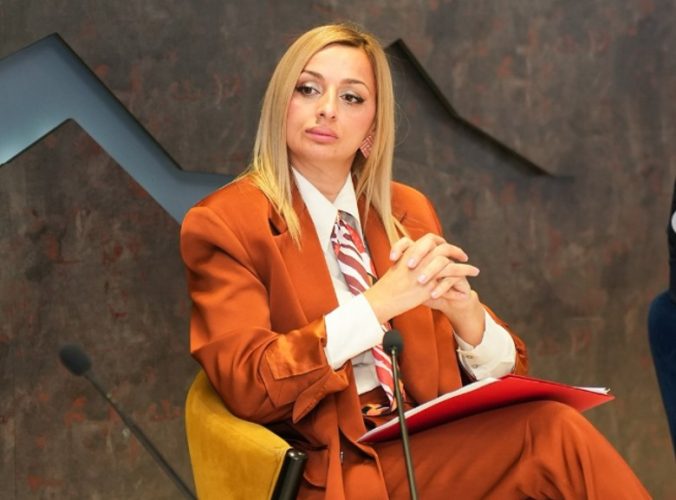
She emphasized that economy would feel benefits too, because foreign investment in Montenegro would increase since the environment would be in line with European standards.
„I think that Montenegro will be exceptionally competitive and that it will be precisely the European experts who will choose Montenegro to live in. However, Montenegro has to reach the level of European standards in terms of salaries and ensuring working conditions and protection of the rights of workers“, said Šućur and added that the state was making an environment where workers are protected, particularly through the recent reforms of labour legislation which resulted in higher transparency of salaries and improvements in the protection of workers’ rights and balance between private and business life.
She also underlined the importance of European funds, inviting the citizens to use them to improve their business, capacities and skills of workers.
Talking about how joining the market of 500 million people will affect the prices and selection of products, Vukčević says that Montenegro has still not developed its own production, which makes it an import market, and that our offer to Europe is not good enough and should be increased. He adds that, when it comes to offer to the consumers, import of products will remain the same, as well as the prices.
By Milan Žugić, MINA Agency
This text was published in the 18th issue of the magazine Eurokaz.