



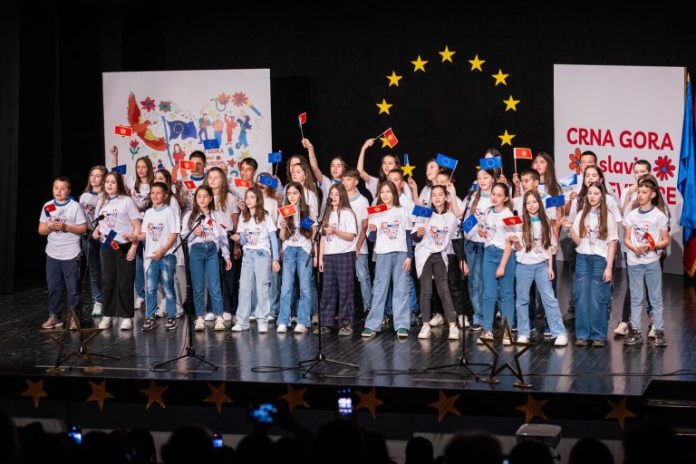

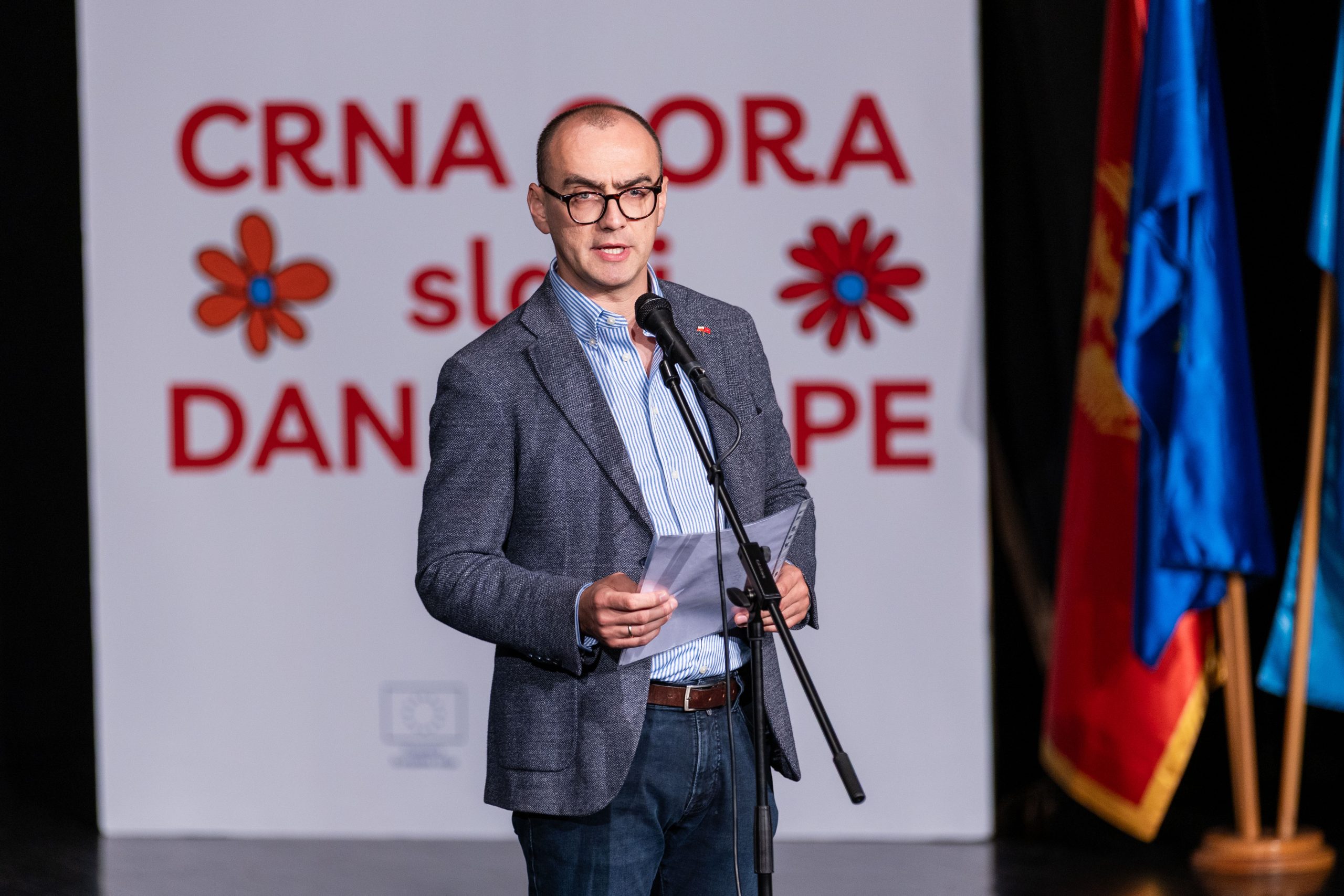
Music, dance, and children’s songs, along with messages of friendship and togetherness, marked the celebration of Europe Day in Andrijevica, where primary school students showed how Europe begins precisely within the community, among people, and in everyday small gestures of understanding and respect. The Ministry of European Affairs, with the support of the European Union Delegation to Montenegro through the EU4ME project, in cooperation with the Municipality, the Public Institution Centre for Culture and Sports, and the primary schools “Bajo Jojić” and “Milić Keljanović”, organized the Europe Day celebration through the cultural program “Europe in My Backyard”.

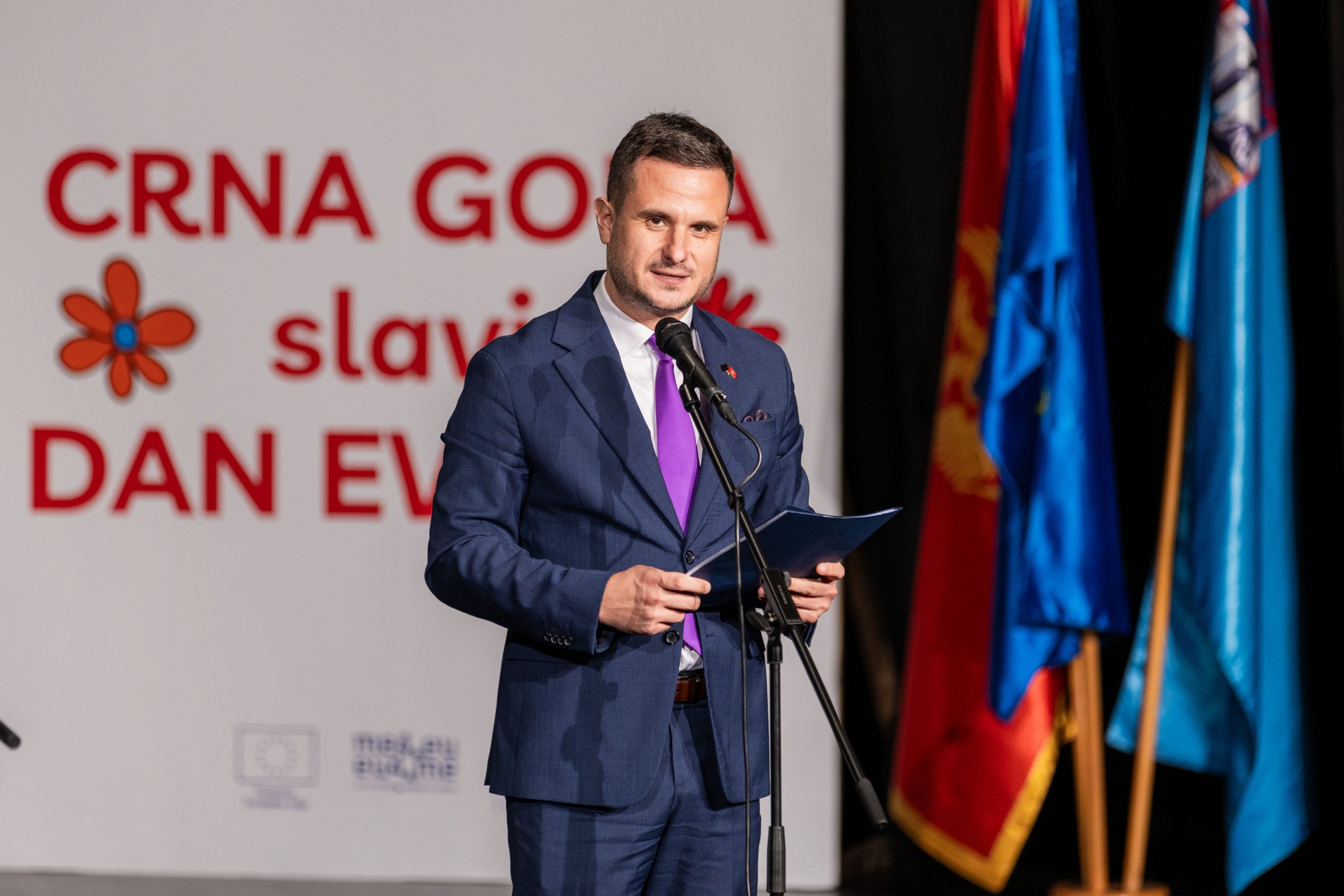
Montenegro’s Chief Negotiator with the European Union, Predrag Zenović, said that Montenegro is in the final stage of the negotiation process and that the European path is not only a set of laws and reforms, but a fundamental transformation of society.
“The European future of Montenegro is not created only in Podgorica or Brussels, Berlin or Paris, Warsaw and Tallinn – it is also being created here, in Andrijevica. In your families, schools, among young people, and all those who contribute to the community through their work. That is why it is especially important that we celebrate Europe Day together with children and educational institutions, because they are the ones who carry the future of a European Montenegro,” said Zenović.
The cultural program “Europe in My Backyard”, prepared by primary school students through music, recitations, acting, and dance, brought a story about freedom, understanding, and connection among people. A special part of the program was the play of the same name, in which students spoke in a humorous and direct way about diversity, dialogue, and life in a community. The program included rhythmic and dance performances, a performance of an excerpt from The Mountain Wreath, as well as a musical segment in which students performed the song “I Love You” in several European languages.

The Manager of the Municipality of Andrijevica, Saša Maslovarić, pointed out that young people represent the most important link between the local community and the European future we aspire to.
“For Andrijevica, European integration is not just a political process. It represents an opportunity for the development of our municipality, the improvement of infrastructure, support for young people, education, tourism, agriculture, and the creation of better living conditions for all citizens. Through European projects, we are already seeing concrete results today, and we believe that local communities feel the importance of European support the most,” said Maslovarić.
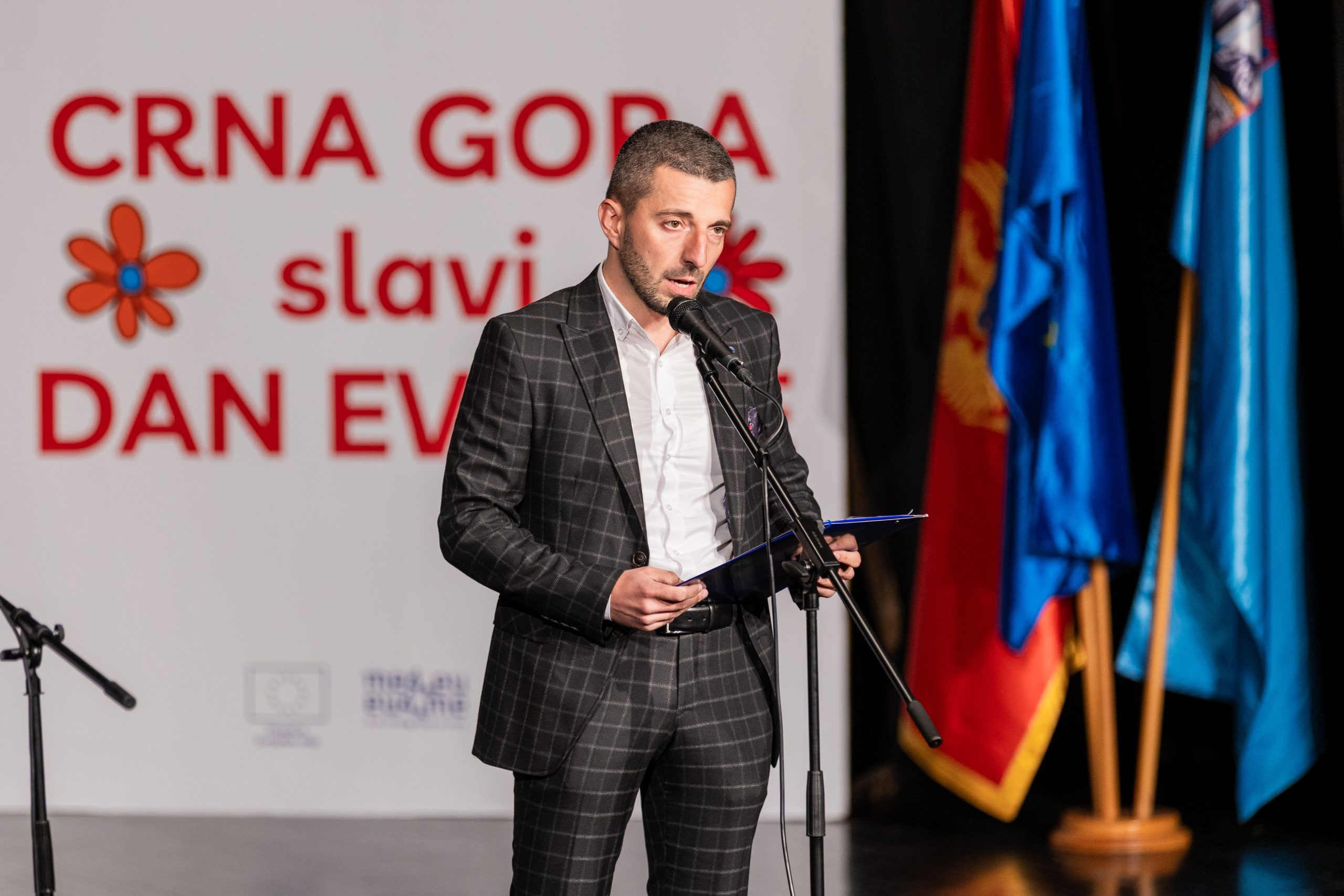
The Deputy Head of Mission of the Embassy of Poland in Montenegro, Bartosz Marcinkowski, said that Europe Day carries a simple but powerful message: that countries and people are stronger when they work together.
“Poland’s experience clearly shows how beneficial EU membership has been for Polish regions. Small towns and rural areas benefited from EU membership primarily through cohesion funds, infrastructure investments, agricultural subsidies, and greater opportunities for work and education. When Poland joined the EU in 2004, unemployment was nearly 20%, while today it stands at only 3% and is among the lowest in the entire Union. That success would have been extremely difficult to achieve without the support and membership of the EU,” emphasized the representative of the Polish Embassy.
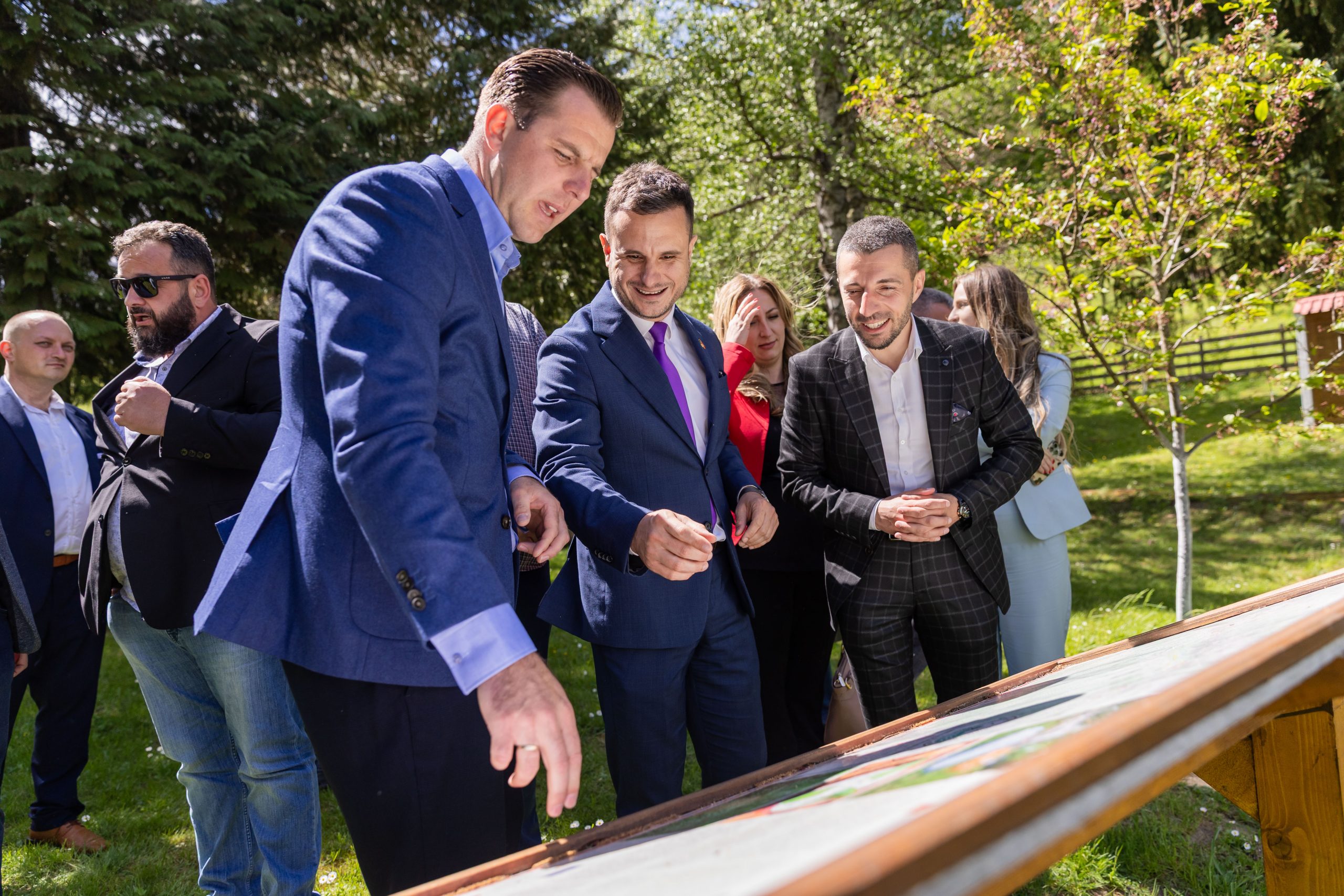
As part of the Europe Day celebration, a meeting was also held between representatives of the Municipality of Andrijevica and the delegation of the Ministry of European Affairs and the Embassy of Poland in Montenegro, as well as a visit to the Adventure Centre and the “Mojan” hostel, where the results of the EU project and the potential for the development of sustainable tourism in northern Montenegro were presented.
Following Herceg Novi and Andrijevica, the celebration of Europe Day, organized by the Ministry of European Affairs, continues throughout May with events in Cetinje, Kotor, Tuzi, Plav, and Gusinje, through various cultural programs dedicated to European values and local communities, with young people as the main participants.