



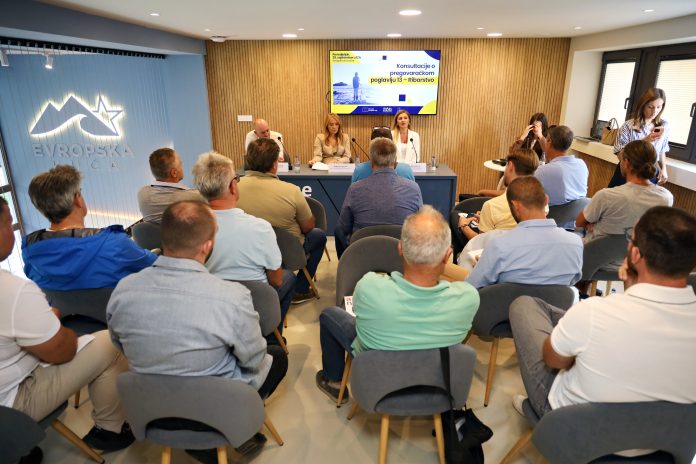

Representatives of several fishing associations and coastal municipalities attended today’s consultations on Negotiation Chapter 13 – Fisheries, where they exchanged views with representatives of state institutions and experts on the importance of alignment with European policy in this area. The event was organized by the Ministry of European Affairs within the EU4ME project, funded by the European Union.
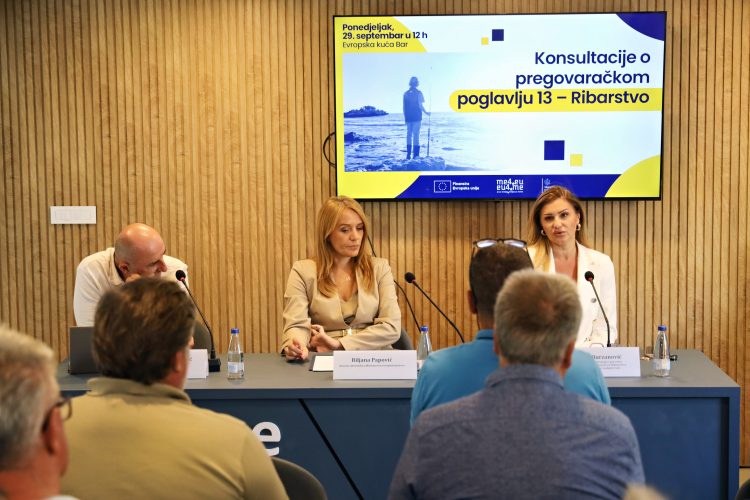
Representatives of several fishermen’s associations spoke with Biljana Papović, State Secretary at the Ministry of European Affairs; Katarina Burzanović, Head of the Negotiation Working Group and General Director of the Directorate for Fisheries at the Ministry of Agriculture, Forestry and Water Management; and Aleksandar Joksimović, Scientific Advisor at the Institute of Marine Biology and member of the Negotiation Working Group for Chapter 13.
State Secretary Papović reminded that Negotiation Chapter 13 regulates the area of fisheries and alignment with the EU Common Fisheries Policy (CFP). Papović stated that, for the purpose of temporarily closing this chapter, Montenegro has fulfilled two final benchmarks, related to improving administrative, inspection, and control capacities, as well as aligning legislation with EU acquis. In this regard, she emphasized that the Government of Montenegro adopted an Action Plan to strengthen administrative, inspection, and control capacities required by the Common Fisheries Policy.
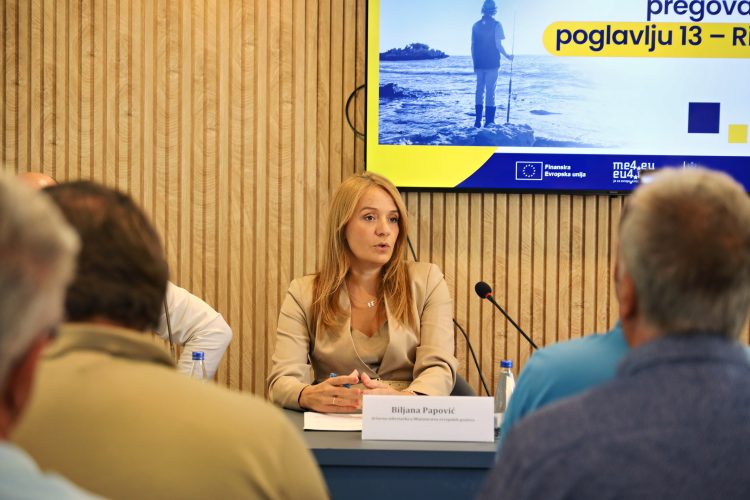
“A lot of important work has been done in the past period to meet the conditions for temporarily closing this chapter. These results are not only technical. They are essential for fisheries policy because, in addition to ensuring citizens have safe fish on their tables, they introduce measures to protect the sea and fish stocks so that fish and seafood will be sufficient for future generations. With EU membership, Montenegrin marine products gain access to the EU market, with state support for fishermen and joint management of the sea with European partners. In addition, membership will bring better working conditions for fishermen and greater access to EU funds,” said Papović.
Head of the Negotiation Working Group Katarina Burzanović emphasized that special focus was placed on the legislative framework.
“The Law on Marine Fisheries, the Law on Aquaculture, the Law on Structural Measures and Allocation of State Aid in Fisheries and Aquaculture, and the Law on Market Organization in Fisheries and Aquaculture have been adopted. These regulations are largely aligned with EU regulations and provide for the adoption of an extensive set of secondary legislation, which will enable full implementation of the acquis by 2027,” Burzanović explained.
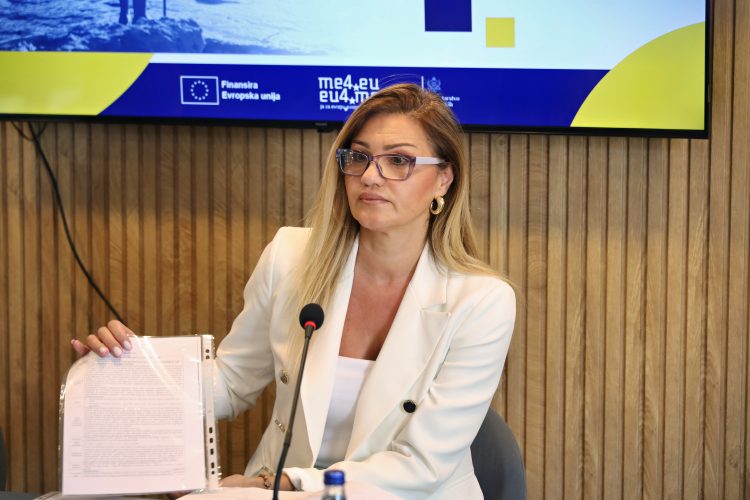
She highlighted that, in the area of resource and fleet management, Montenegro has introduced electronic systems for issuing licenses and recording catches, and that, in cooperation with the Institute of Marine Biology, measures for resource protection and management plans are being defined.
Scientific Advisor at the Institute of Marine Biology, Dr. Aleksandar Joksimović, pointed out the importance of a joint resource management plan in the Adriatic and emphasized the significance of scientific contribution to the negotiation process and EU approximation.
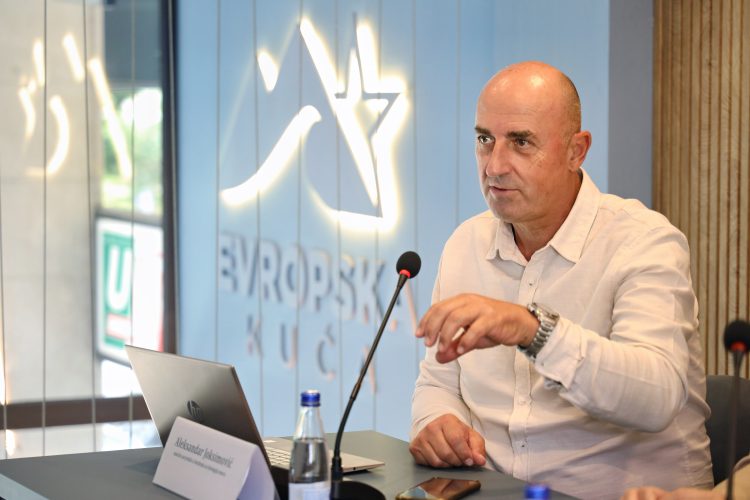
“EU accession opens significant opportunities for financial support from European funds, but until then, fishermen must be patient. It is important to further strengthen the fisheries sector to improve the position of fishermen in Montenegro,” Joksimović stated.
During the consultations, representatives of fishermen’s associations highlighted the daily problems they face, emphasizing that they lack basic conditions for work and survival of this economic sector.
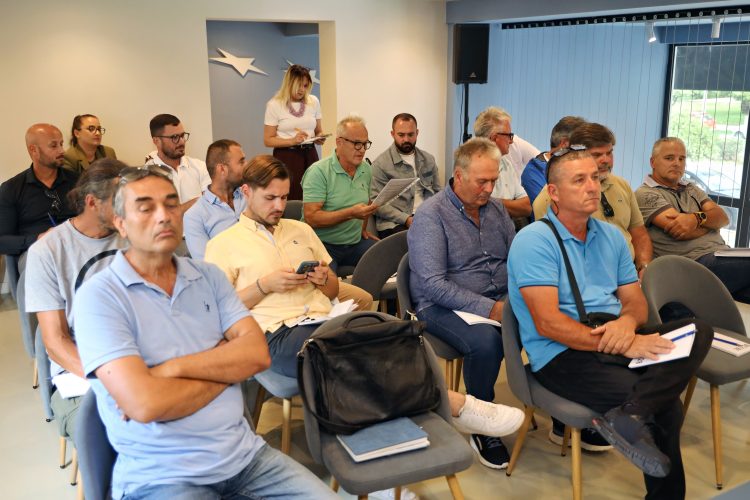
“We face unfair competition in purchase prices for fish products and propose that the state set protective purchase prices below which the sale of fish products could not be conducted. In addition, poaching and insufficient inspection supervision are problems,” the associations emphasized.
Representatives of the fishermen’s associations particularly stressed the lack of moorings for their boats, especially in the Bay of Kotor.
“We do not have basic conditions for the survival of fisheries. Here in the Bay we keep boats moored or in some small harbor,” emphasized fishermen from the Bay.
Fishermen stressed that, despite Montenegro’s legislation being well aligned with EU law, they remain dissatisfied.
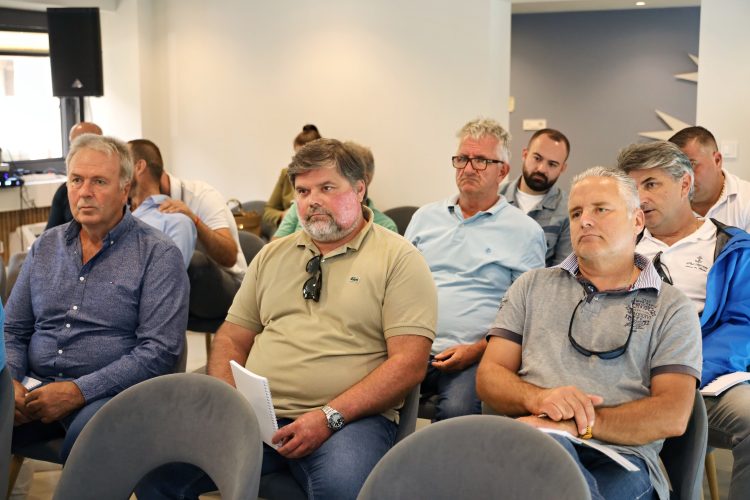
“The fishermen’s problem must be approached seriously and not only administratively. We will have the sea, but we will not have fishermen,” the associations concluded.
Representatives from the National Association of Fish Producers of Montenegro, the Association of Aquaculturists of Montenegro, the Professional Fishermen Association “Sveti Nikola,” the NGO “Young Fishermen of Montenegro,” the Fishermen’s Associations of Ulcinj and Sidro, as well as representatives of the municipalities of Bar and Ulcinj, attended the meeting on behalf of the fishermen’s associations.
MINISTRY OF EUROPEAN AFFAIRS