




There is a continuity of one great idea, idea about eternal peace, that Emanuel Kant formulated in Europe. And there is a problem to make this great idea come true. There are many reasonable people in Europe, but there was very little reason in the last two centuries. Between the great idea and its implementation there is a gap, and it is the task of every generation to bridge that gap in a reasonable manner. (Đinđić, 172)[1].
In the complex process of Montenegro’s integration into Europe, it is useful to remind ourselves of the core of the European idea and ask ourselves one more time why the institutions, civil sector, and interested individuals invest efforts so that we can become members of the European Union. In the long-term and exhausting process of negotiations between Montenegro and Europe, that is being developed at different pace, again the old good question re-emerges: why we are where we are. Montenegro is actually conducting two parallel negotiation processes. On one side, the negotiations within, where, torn by its own contradictoriness, weaknesses and powers, it tries to overcome the challenges and show its potential, doing it with more or less success. And on the other side, negotiations with the European Union, where it is trying to implement the reforms in an accelerated manner. The essence of everything is the fact that citizens believe in the European idea and that it seems to them that being a part of Europe makes sense. It is not only a matter of improving the material standard, but, to a large extent, a matter of adopting the new idea of European identity, wish to progress, hope for a better future – in a nutshell, positive emotion to European concept and values.
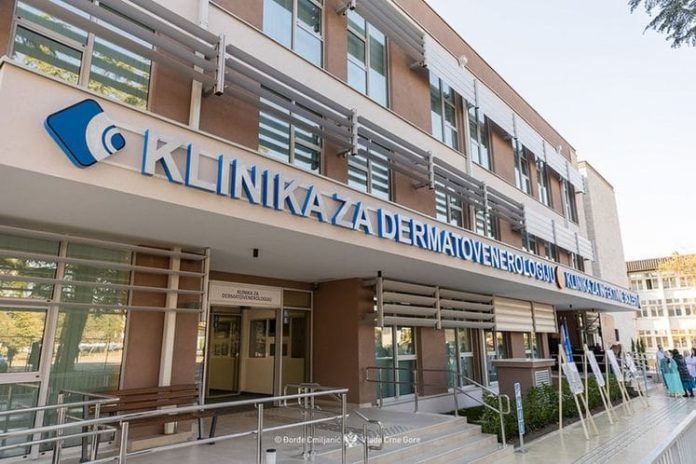
Good and progressive, sometimes strict, teacher on Montenegro’s European integration path is the Instrument of Pre-Accession Assistance – IPA. Divided into three perspectives (IPA I, II and III) it has shown continuity, it taught us procedures, planning, monitoring and evaluation. It showed us how to come from an idea to implementation. One of the IPA success stories is the project of construction of two significant health facilities: clinic for infectious diseases and clinic for dermatology and venerology that were finalized through the IPA programme 2018 within the IPA II perspective.
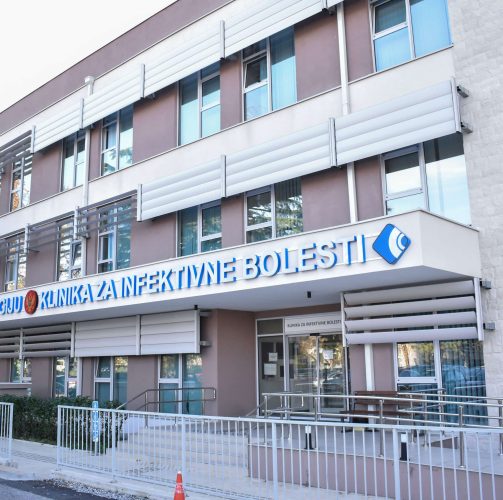
The project of construction of these two clinics started on 4th January 2023 with the envisaged duration of 24 months, i.e. by 4th January 2025. Value of this project was 8.5 million euros, and the goal of the project was to improve the health care system in Montenegro to ensure the best possible care for citizens, with improved infrastructural and technical capacities and experience of the institution and staff. Clinics were opened on 19th December 2024 and for almost a year they have been confirming their contribution to the improved health care of citizens.
Since this is a large, significant and successful infrastructural project, it has yet again shown that European idea has positive implications for daily lives of citizens and, in this case, for one of the most important segments – health care. It is important to emphasize that Montenegro is going through long and complex challenges when it comes to sustainability of the health system. Many reforms remain to be implemented, our pace has to be faster, but with persistent European investment in Montenegro, through IPA mechanism that is both complex and creative, the true benefits for citizens have been confirmed. IPA is much more than money: it promotes discipline, predictability, stability of the system, and financial responsibility. Its long-term presence in Montenegro shows that European values are being lived here. It seems that IPA is the best to prepare us for membership and that the people who work in this structure are aware of all the benefits and challenges. The beauty and significance of being a part of Europe is confirmed in the best possible way when a project is implemented where Montenegro is outdoing itself all over again and proving that reforms are painful in the beginning but healthy in the long run.
From the book “Europe with Soul”, KAS Europe, 2009.
By: Ana Janković, Ministry of European Affairs
This text was published in the 17th issue of Eurokaz magazine.