






The reconstruction of the Španjola Fortress in Herceg Novi has entered the final stage of the first phase, while preparations for the continuation of the works have already begun.
The Španjola Fortress revitalisation project is being implemented within the Interreg IPA – Creativity programme and is financed by the Ministry of Culture and Media with the support of the European Union and partners from Albania and Italy.
As architect Vuk Čvoro points out, numerous valuable elements that were not known at the time the project documentation was prepared were discovered during the reconstruction, requiring amendments and further elaboration of the project.
“We are currently in the final stage of the first phase of the fortress reconstruction. We have already practically entered the second phase, as some structures have been cleared and prepared for further work. During the works, we came across paved surfaces and parts of the fortress that had been buried beneath layers of soil, so we are now simultaneously modifying and refining the project. This slows down the works to some extent, but significantly increases the value of the entire complex,” says Čvoro.
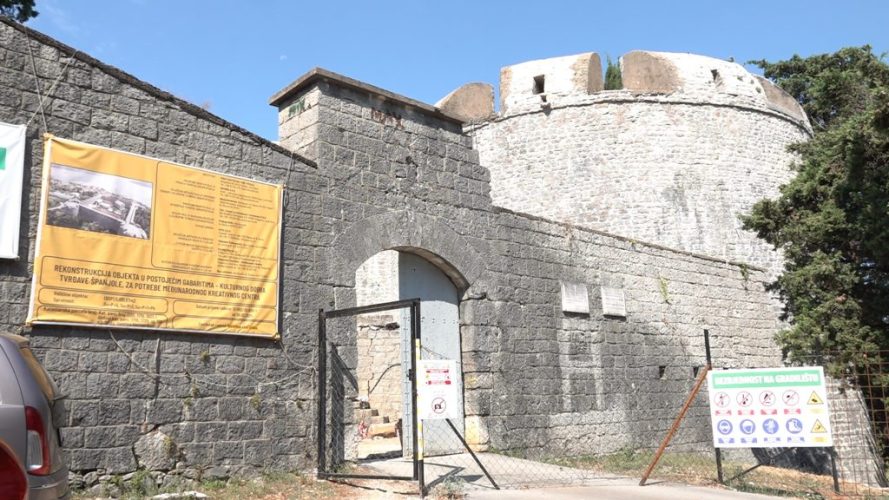
According to him, the completion of works on the barracks building is planned for September, when the so-called grey, or first, phase will be completed. In the meantime, numerous changes have been made to the infrastructure solutions, including heating and technical installations and the arrangement of equipment, so that the final solution will be of higher quality and more functional.
Čvoro emphasises that the discoveries on site did not surprise him, as he had pointed out from the beginning that designing such a complex site without prior detailed research presented a major challenge.
“We discovered numerous infrastructure elements from the Austro-Hungarian period, canals, water supply and sewage systems, and even routes through which electricity was later introduced. All of this was valuable in helping us adapt the new infrastructure to the existing situation and preserve the authenticity of the site,” Čvoro explains.
In addition to infrastructure systems, the remains of smaller structures, various types of paved areas and new information about how the fortress functioned were discovered during the clearing works, including its water collection and distribution system. Although the legend of a tunnel connecting Španjola with the city has not been confirmed, the research has opened up new possibilities for a better understanding of this historical complex.
Čvoro believes that there will still be room for additional archaeological research after the construction works are completed.

“I am sure that Španjola will function very well if it is managed properly, but it is essential that it be better connected to the city by road. In addition to expanding the access infrastructure, one attractive possibility is the construction of a cable car, which would further enhance the value of the fortress and enrich the tourist offer of Herceg Novi,” Čvoro concludes.
Even after the completion of the second phase of the reconstruction, he points out, the work on Španjola will not be finished. The access roads, parking areas, lighting and green spaces will still need to be arranged, while archaeological research will continue and could provide new insights into the history of one of the most significant fortification complexes in Herceg Novi.
Source: rthn.co.me