




Fish migrate freely through the seas, but fisheries in the European Union have clear rules. The management of fish stocks, the fishing fleet, and the fish market is regulated by the Common Fisheries Policy of the European Union (CFP). As explained by Dr. Aleksandar Joksimović from the Institute of Marine Biology in Kotor, fisheries may be the most concrete example of joint action within the European Union.
“Nothing is as common in the European Union as fisheries, which is why it is called the Common Fisheries Policy. Fish resources are not only Montenegrin, they do not have passports, so they swim at one moment in Croatia, then in Albania, then in Montenegro,” Joksimović points out.
The EU’s Common Fisheries Policy has several key objectives: protecting fish stocks, smart and sustainable management of the fleet and resources, as well as strengthening international cooperation through data exchange and agreements on the protection of seas and fish species. Through European funds, the CFP simultaneously provides support to fishermen — from fleet and equipment modernization to assistance mechanisms in crisis situations.

“When we enter the family of European countries, our national laws are no longer important. We accept the EU’s Common Fisheries Policy, which precisely prescribes the rules and everything we need to do,” says Joksimović.
During the negotiations, special consideration was given to preserving traditional fishing. Montenegro received three derogations, that is, temporary exemptions from the full implementation of the CFP, in order to protect centuries-old fishing practices.
Two exemptions relate to the Bay of Kotor, concerning the use of coastal beach seine nets with smaller mesh sizes for catching sardines and anchovies, and the use of surrounding purse seine nets in a limited area within the bay, closer to the shore and at shallower depths. The third derogation refers to an exemption from the 120-meter net height limit on the open sea. The derogations are granted for a period of three years.
“We requested a derogation, that is, an exemption for beach seine nets in Boka. This is something that has lasted here for almost 800 to 900 years. We want it to remain a tradition; it will not endanger the resources of the European Union, the Mediterranean, or the Adriatic. I deeply believe that the European Union cares that something that has lasted eight centuries should remain part of its future heritage,” Joksimović emphasizes.

At the same time, pressures on wild fish stocks are becoming increasingly pronounced, which is why greater importance is also being given to mariculture. As explained by Dr. Milica Mandić from the Institute of Marine Biology, it is one of the key responses to the decline in the quantity of fish in the sea, caused by overfishing, climate change, pollution, and the emergence of invasive species.
“There are numerous pressures reducing the quantity of wild fish, so mariculture is a way to overcome such situations and to focus more on fish production and less on harvesting natural resources,” Mandić explains.

In Montenegro, however, this sector is still underdeveloped. For this reason, the Institute of Marine Biology, with the support of European funds, has in recent years been intensively strengthening its capacities in order to provide scientific and professional support to the development of mariculture.
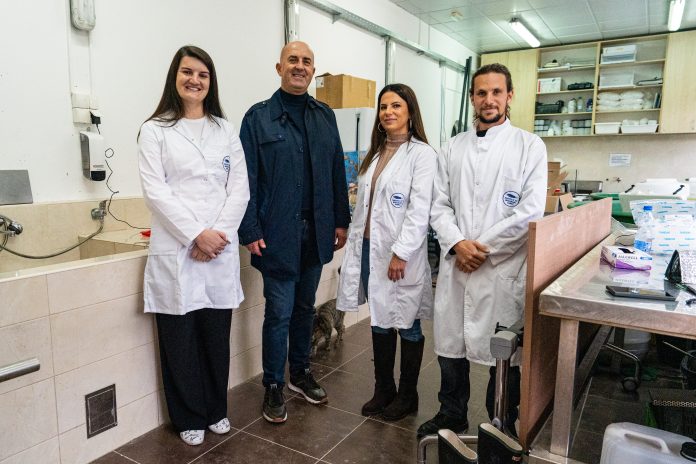
“By drawing funds through IPA projects and the Interreg program, we managed to upgrade the Institute’s building and establish a modern Laboratory for the cultivation of oysters, shellfish, and the production of microalgae, which represent the basis of nutrition in farming,” Mandić states. The laboratory, she emphasizes, also enables existing and future farmers to become familiar with the entire production process.

The construction of the laboratory and its complete equipment were carried out as part of the Food4Health project, supported through the Interreg IPA Cross-Border Cooperation Programme Italy–Albania–Montenegro 2014–2020, financed by the European Union through the Instrument for Pre-Accession Assistance (IPA).
Although the closing of Chapter 13 does not mean the end of obligations, the Institute of Marine Biology agrees that EU accession opens a new phase of development for Montenegro.
“On the day of entry into the European Union, a new era for Montenegro begins. The most important thing is that the benefit of the ordinary person, fishermen, and communities that live from the sea be at the focus of all policies,” Joksimović concludes.