





When marking any international day, almost in the same pattern, we speak about the affirmation or endangerment of certain rights, whether it concerns women’s rights, Roma, migrants, but also health, the planet, and the environment. However, the question remains what happens during the rest of the days in the year and how global topics are translated into the context of the local community and real life. It is precisely in that space that the position of the Roma and Egyptian (RE) community in Montenegro becomes clearly visible.
If we simplify bureaucratic formulations, these would be symptoms you cannot explain, problems you express in a language that institutions do not understand, or an identity that the system does not even recognize. The most vulnerable among members of the RE community are children, the elderly, and pregnant women, who become visible only when they reach an emergency condition, without guarantees that they will have examinations or adequate childbirth care.
In that context, only systemic solutions can make a significant impact and help translate the everyday life of the RE community into the language of institutions. Mediators play a key role here, taking on the responsibility of making institutions accessible, understandable, and present where they are needed. One of them is Nardi Ahmetović, who works at the Health Center in Nikšić.
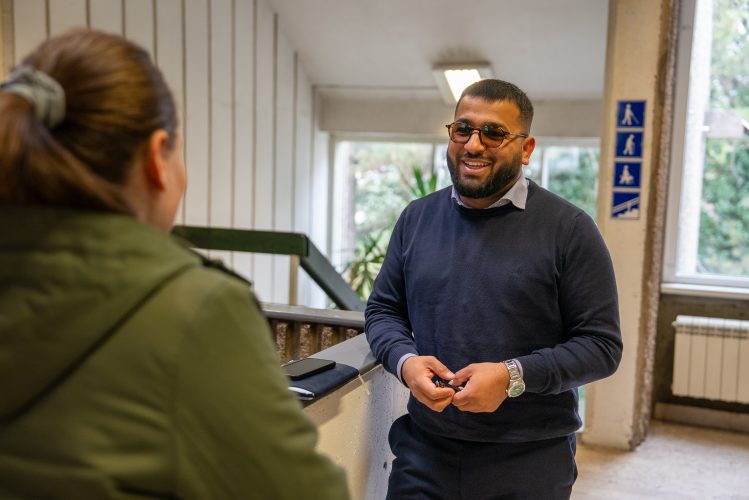
“Until the age of 16, I did not have health insurance, and I clearly remember how difficult it was for my grandmother when we had even a simple fever, let alone something more serious. The RE community also faces problems due to language barriers, complex administration, and different treatment caused by cultural differences,” says Ahmetović, who came to Montenegro from Italy in early childhood.
According to him, through the involvement of mediators, people have someone to turn to for help, but also someone who helps them understand their obligations.
“I am a social associate, a health mediator, but also someone who follows their everyday life. Health care is the most sensitive area, because if you are not healthy, you cannot fight for your rights nor fulfill your obligations,” Ahmetović concludes.
The importance of mediators in helping the community is also emphasized by Zoja Tarlamišaj.
“We have a large number of school-age children who are not registered in birth records and do not have the right to health care. As a result, they have also missed mandatory vaccination. In addition, women are among the risk groups, especially pregnant women who do not have access to regular gynecological examinations, which can lead to complications during childbirth,” says Tarlamišaj.

The importance of mediators, who in the fields of health, employment, and social protection act as intermediaries between the RE community and institutions, is the result of the project “Social Inclusion of Roma and Egyptians through Mediation,” which achieved significant results in 11 municipalities in Montenegro. During the implementation of the project, 83 applications were received for the position of health mediator, and after the selection and training process, 38 mediators obtained certification, while 34 were employed in various institutions across Montenegro.
The project holder is the Ministry of Human and Minority Rights, while the German organization HELP – Hilfe zur Selbsthilfe was responsible for implementation. The project was carried out with financial support from the European Union through the IPA II programme.
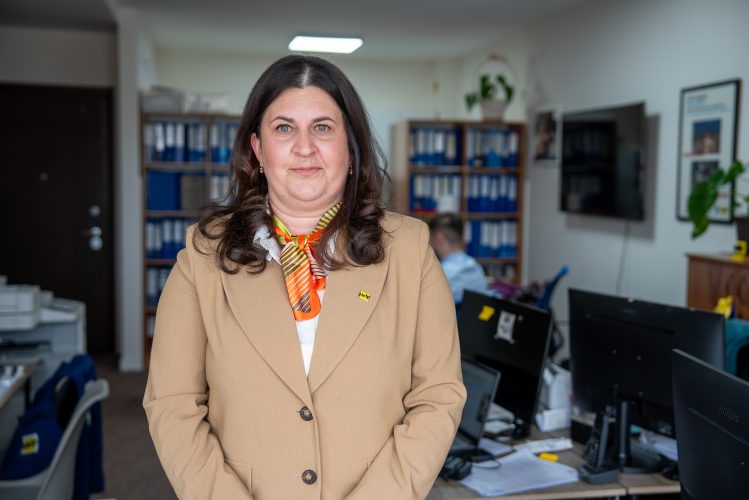
“Training was organized to acquire professional skills for working as associates in the social inclusion of Roma and Egyptians. The results are very visible and highly significant, as for four years now we have had 21 mediators employed through the Ministry of Human and Minority Rights. We have opened the door for the entire RE community in Montenegro, and this has proven to be a valued and useful model both for the RE community in Montenegro and for institutions,” said Dijana Anđelić, Director of HELP for Montenegro.
This is precisely the answer to the question of what happens during all the other days of the year and how global topics are translated into the context of local communities and real life.
And so, while differences are marked through designated days, everyday life still needs to be translated.