



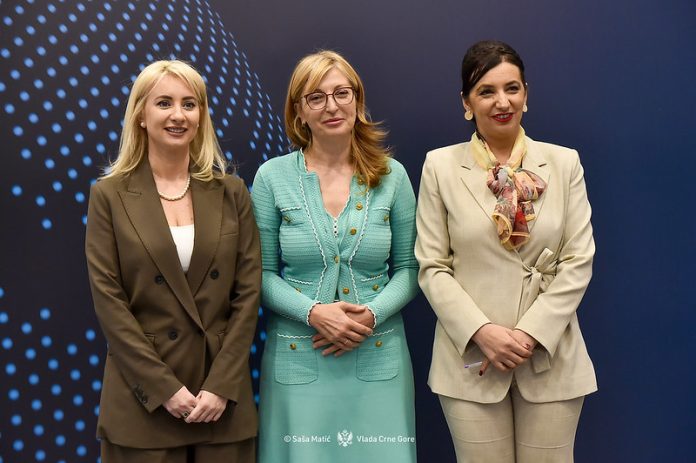

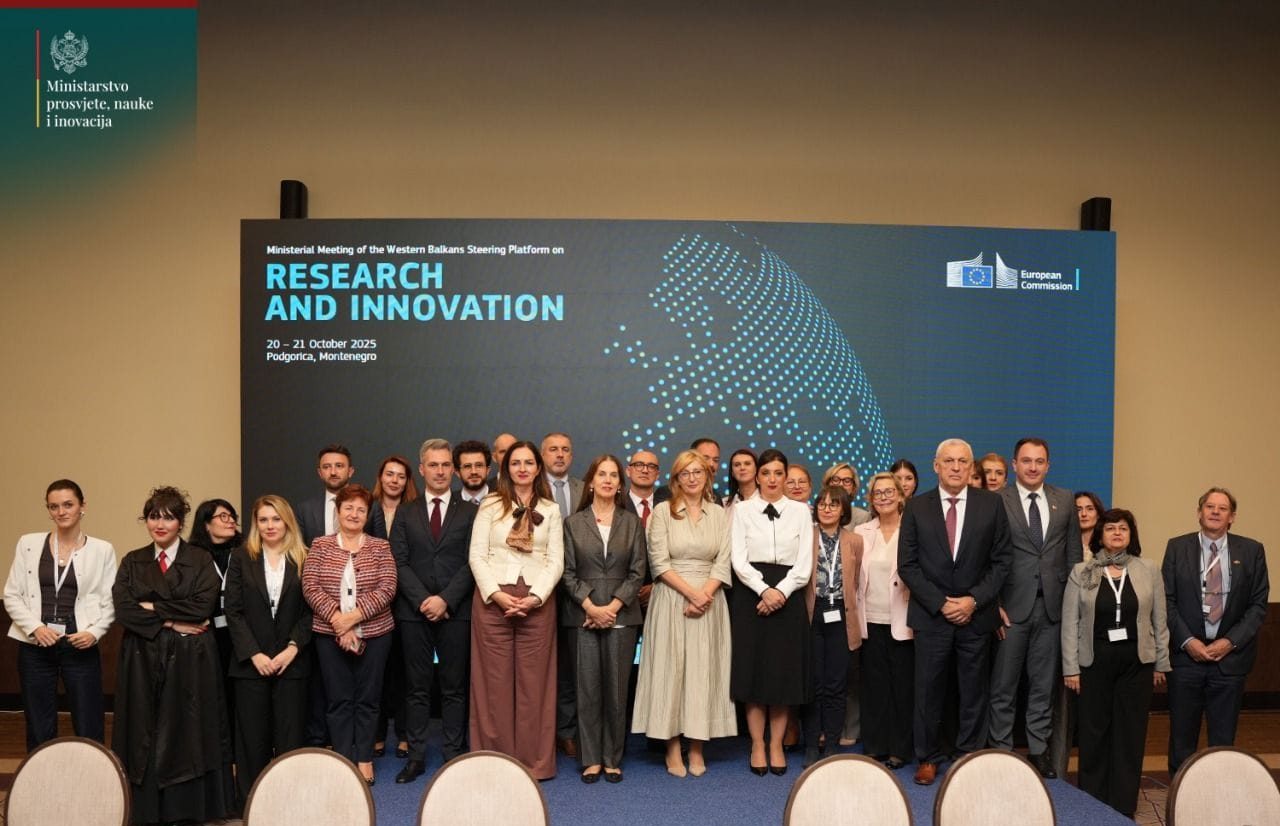
Montenegro today hosted the first day of the Ministerial Meeting of the Western Balkans Research and Innovation Platform. The meeting is being held today and tomorrow, organized by the European Commission, the Presidency of the Council of the EU, and Montenegro. The platform represents an operational mechanism of the Agenda for Innovation, Research, Education, Culture, Youth and Sport in the Western Balkans (WB Agenda), launched by the European Union with the aim of promoting scientific excellence.
The event, aimed at integrating the region into the EU research system, brought together representatives of the European Union, ministers from the region, as well as representatives of the scientific, innovation and business communities. Among those addressing the participants were Ekaterina Zaharieva, European Commissioner for Startups, Research and Innovation; Johan Sattler, Ambassador of the European Union to Montenegro; Anđela Jakšić-Stojanović, Minister of Education, Science and Innovation; and Maida Gorčević, Minister of European Affairs. The event was also attended by line ministers from Serbia, North Macedonia, Albania and Kosovo, as well as representatives of EU initiatives, projects and bodies such as COST (European Cooperation in Science and Technology) and the EIT (European Institute of Innovation and Technology).
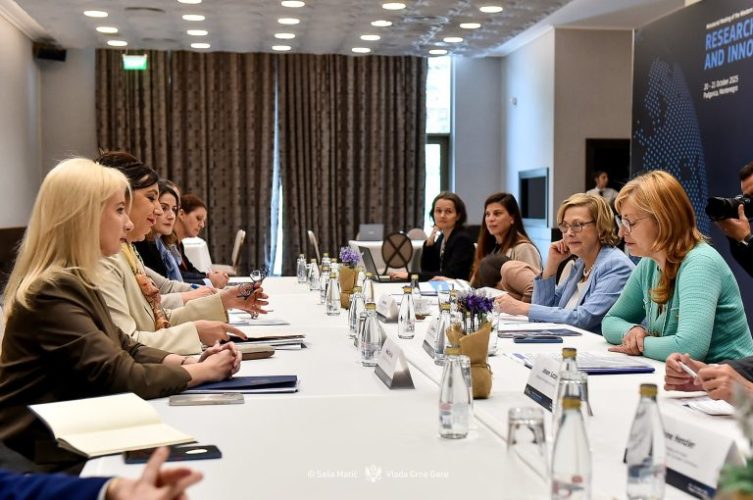
Ekaterina Zaharieva, European Commissioner, emphasized that she was particularly pleased that the ministers had gathered in Podgorica, as this is a key moment for strengthening the partnership between the European Union and the Western Balkans in the field of research and innovation.
“The European Union and Montenegro are strong partners in the field of innovation and research. Montenegro has been participating in our framework programmes since 2008. Since then, it has made impressive progress. We have a shared task ahead: to turn the brilliant science and entrepreneurial spirit of this region into a driver of economic growth,” said Ekaterina Zaharieva, European Commissioner for Startups, Research and Innovation.
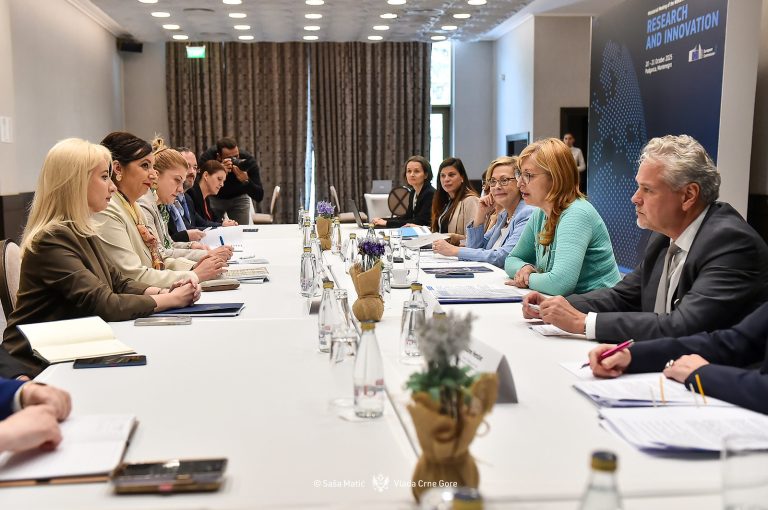
Johan Sattler, Ambassador of the European Union to Montenegro, emphasized that a positive dynamic is clearly visible in the Western Balkans countries.
“Halfway through the Horizon Europe programme, applicants from the region have already secured around €180 million through more than 500 projects, which is an outstanding success that demonstrates the strength of our cooperation in research and innovation. From digital solutions for agriculture to advances in healthcare and maritime technologies, the Western Balkans is proving its capacity to contribute to Europe’s scientific excellence,” Ambassador Sattler stressed.
Prof. Dr. Anđela Jakšić-Stojanović, Minister of Education, Science and Innovation, delivered strong messages about Montenegro’s strategic direction:
“Our country remains firmly committed to smart specialisation and the development of research infrastructure as key pillars of its transformation. Our message is clear—we are ready to contribute to a shared vision of an innovative and competitive Europe, and the bridges we are building today are the foundations of our common European future,” said Jakšić-Stojanović.
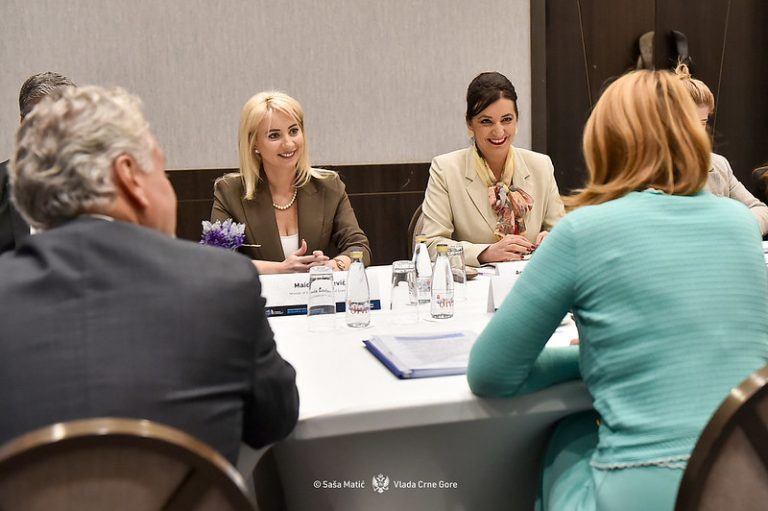
Maida Gorčević, Minister of European Affairs, stated that “Montenegro remains firmly committed to completing the negotiation process by the end of next year, thereby opening the path toward full membership by 2028. In this context, we recognize the transformative power of research and innovation for economic growth, sustainable development and social cohesion. We see science not only as a driver of technological excellence, but also as a key bridge toward European integration.”
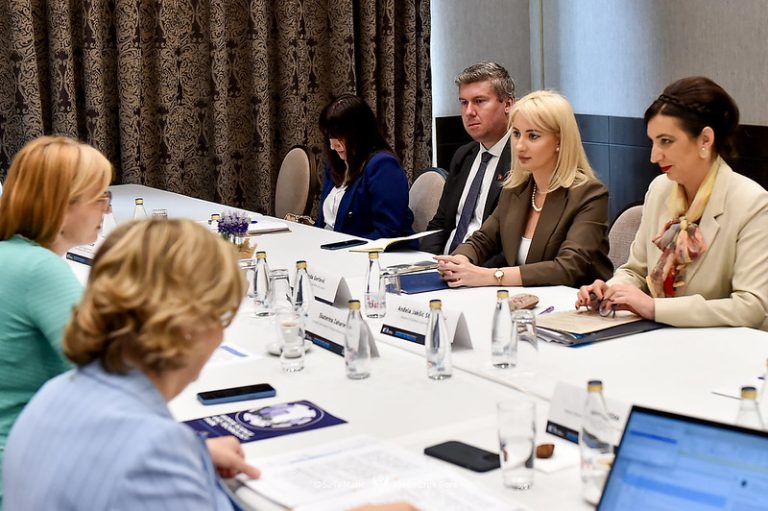
During the plenary session, Minister Jakšić-Stojanović highlighted, among other things, numerous public calls for scientists and researchers. She spoke about Montenegro’s expected accession to ELI ERIC (the most advanced European infrastructure in the field of laser and photon science). In addition, she presented the MONUSEN project—the first Horizon Europe project coordinated by a Montenegrin institution—which resulted in 27 scientific papers and three patents and focuses on seabed research. Montenegro has also recorded a historic success through the CENNA project, focused on smart environmental monitoring. As noted, the Government of Montenegro is also systematically investing in artificial intelligence through national research calls that support this topic and through strategic documents.
The Minister also presented Montenegro’s results in implementing the Smart Specialisation Strategy (a strategy that identifies areas in which Montenegro has comparative advantages and that will enable access to EU structural funds), noting that Montenegro was the first country outside the EU to adopt this document back in 2019, and that the development of the second strategy (2026–2031) is now underway. To date, €168 million has been invested, including the establishment of the Innovation Fund, the construction of the Science and Technology Park in Podgorica, the strengthening of Technopolis in Nikšić, and the opening of the Digital Revolution House.
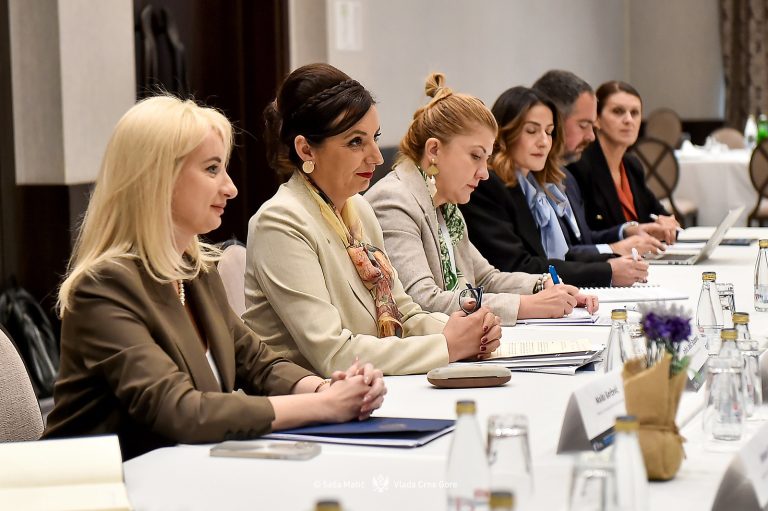
Participants highlighted the importance of further cooperation, the development of research infrastructure and smart specialisation strategies for addressing the challenges of the green and digital transitions, as well as the role of artificial intelligence in science. Conclusions from the plenary part of the ministerial meeting included, among other things, a commitment to stronger links between academia and industry.
“Although our expenditures on research and innovation still range between 0.2% and 1% of GDP, our shared goal of reaching 3% is not a dream—it is a direction. Every investment in knowledge brings us closer to a stronger, more competitive and more connected region,” Jakšić-Stojanović concluded.
Ministry of Education, Science and Innovation