



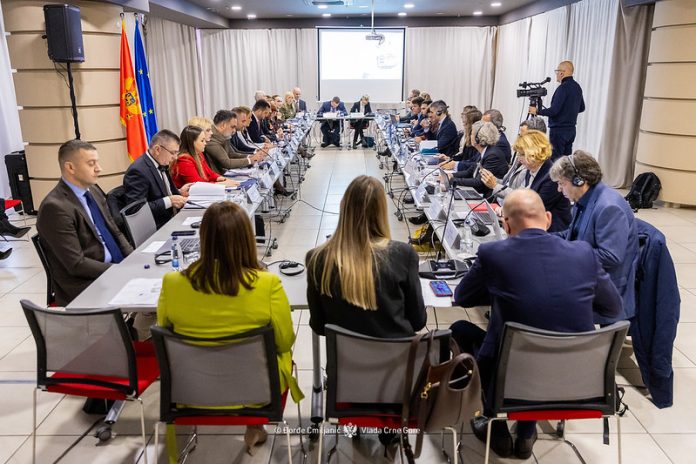

Montenegro is hosting a TAIEX Peer Review mission on the topic of combating organized crime and corruption, taking place from 24 to 28 November 2025.
The mission brings together experts from EU member states and domestic institutions, with the aim of thoroughly analyzing the national system’s ability to effectively respond to challenges related to high-level corruption, organized crime, and money laundering.
Chief Negotiator Predrag Zenović emphasized that the key to successfully combating organized crime and corruption is continuous coordination among all relevant institutions and a systemic approach in implementing the law. “Final court decisions are not only a formal indicator but the clearest evidence that European standards are being applied in practice. Through coordinated work of all relevant institutions, we will continue to prioritize the fight against corruption and organized crime, ensuring a more functional and efficient system for our citizens,” Zenović stated.
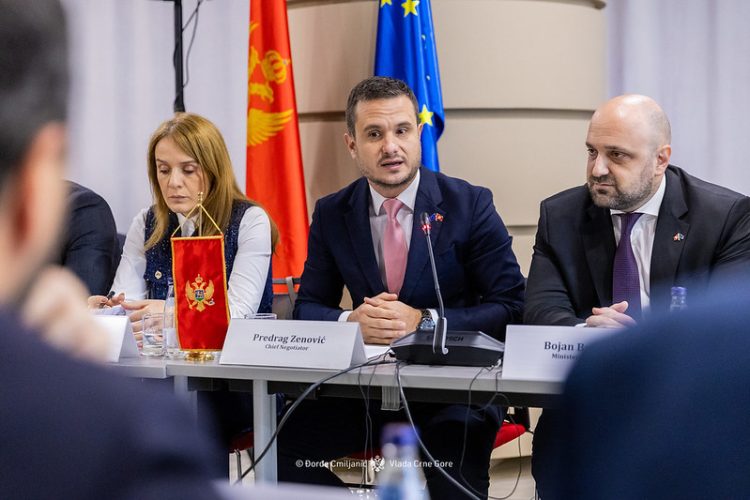
The Chief Negotiator said that this mission represents a key tool for assessing Montenegro’s progress in implementing the recommendations from the 2022 review, as well as for addressing the remaining challenges in the fight against organized crime and corruption. He stressed that the exchange of guidelines and experiences during the mission will further strengthen institutions and contribute to building an efficient, transparent, and reliable system fully aligned with European standards.
Minister of Justice Bojan Božović pointed to the importance of involving all relevant institutions in the peer review process, emphasizing that Montenegro treats this segment of the negotiations as an absolute priority. As he explained, meetings with European experts provide an opportunity for additional verification and evaluation of implemented reforms, as well as for identifying areas requiring additional effort.

“This is an opportunity to openly examine both what has been done and what still lies ahead, and I am convinced that Montenegro will, in the coming period, fulfill the obligations that lead us toward the finalization of Chapters 23 and 24,” Božović said, highlighting Montenegro’s readiness to meet all obligations in the negotiation process by 2026.
President of the Supreme Court Valentina Pavličić particularly emphasized the practical value of analyzing concrete cases. According to her, such an approach enables insight into the actual functioning of the system and provides an opportunity for exchanging experiences with experts from EU member states who face similar challenges in their daily work.

“These are complex cases, and every opportunity for professional exchange helps us improve the quality of court decisions and strengthen the overall efficiency of the judiciary,” Pavličić noted.
State Prosecutor at the Supreme State Prosecutor’s Office Danka Živković reminded that the fight against organized crime and corruption is a long-term process, and that continuous coordination among all relevant actors is necessary to improve system capacities and the institutional response to these challenges.

Roberto Segundo Navarro from DG ENEST stressed the importance of the mission for European integration, noting that this peer review mission comes at a very important moment for the negotiations between the EU and Montenegro. “The engagement of the entire system is absolutely crucial, and achieving concrete results in the fight against organized crime and high-level corruption represents a strategic priority,” Navarro emphasized.
Team leader for the peer review, Judge Theo Byl, highlighted the practical significance of the mission. “The peer review is an analysis based on concrete cases and represents an opportunity for the exchange of best practices with practitioners from member states. The recommendations are not criticism, but an attempt to identify what can be improved to make the system in Montenegro more efficient and effective,” he said.
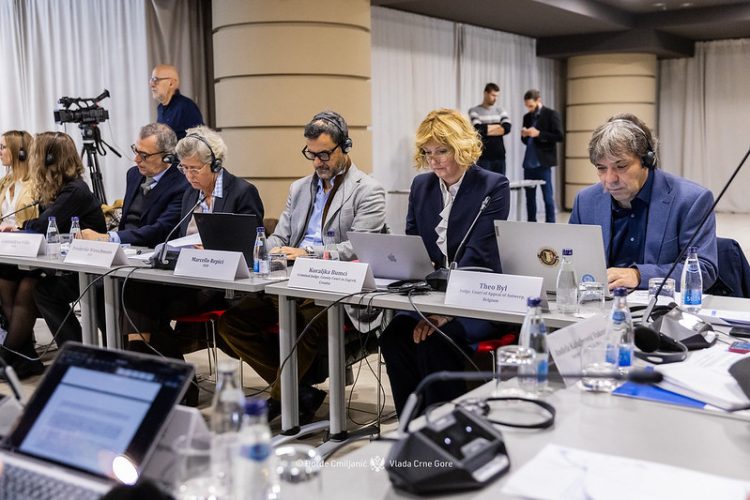
During the mission, meetings are planned with key judicial and security institutions, including the Supreme and High Courts, the Special State Prosecutor’s Office, the Agency for Prevention of Corruption, and the Directorate of the Financial Intelligence Unit. Concrete cases in the areas of organized crime, high-level corruption, money laundering, and public procurement will be analyzed, experiences with European experts will be exchanged, and the implementation of recommendations from the 2022 review will be monitored. The mission also includes an overview of the process of confiscating assets acquired through criminal activities and corruption related to public procurement, thereby further improving the efficiency and credibility of the system.
MINISTRY OF EUROPEAN AFFAIRS