





The regional dialogue on policies for accelerating progress toward sustainable, inclusive, and resilient agri-food systems in the Western Balkans today brought together in Podgorica high-level representatives from governments, international organizations, the academic community, civil society, and the private sector. The event aimed to strengthen cross-sector cooperation, exchange experiences, and define common directions for future development.
During the full-day dialogue, national policies and institutional frameworks for the transformation of agri-food systems were discussed, concrete examples and evidence from the field in regional countries were presented, as well as experiences from local and urban levels. Sessions and examples from representatives of institutions from Serbia, Bosnia and Herzegovina, and North Macedonia, as well as regional NGOs, particularly contributed, highlighting the genuine regional character of the event and enabling the exchange of experiences across different levels and systems. The event was organized in an interactive format, through guided panel discussions, presentations of practical examples, and open exchanges of opinions with participants, allowing direct dialogue between policymakers, experts, and other stakeholders. Special focus was placed on strengthening governance and coordination, the role of data and knowledge in policy-making, and identifying opportunities to accelerate reforms, investments, and stronger regional cooperation.

Opening the event, Montenegro’s Minister of Agriculture, Forestry, and Water Management, Vladimir Joković, emphasized that the dialogue takes place at an extremely important moment for Montenegro, immediately after the closure of negotiation chapters 11 – Agriculture and Rural Development and 13 – Fisheries.
“The closure of these chapters confirms that Montenegro has the capacity to adopt European standards and build modern, sustainable, and competitive agri-food systems. Transforming this sector is not a short-term process but a long-term reform requiring strong coordination of institutions and partnership with all relevant stakeholders,” Minister Joković stated.
Minister of European Affairs, Maida Gorčević, highlighted that European integration provides a natural framework for transforming Montenegro’s agri-food systems:
“The closure of chapters 11 and 13 clearly shows that we have brought agriculture and fisheries closer to European standards and laid the foundations for a more sustainable, inclusive, and resilient system. The European Union brings greater financial support, new investments, and access to the single market, but also the obligation to implement reforms responsibly, with strong support for farmers and rural communities,” Gorčević emphasized.

The UN Resident Representative in Montenegro, Caroline Tissot, reminded participants that the transformation of agri-food systems goes beyond agriculture itself and represents a broader societal challenge. Climate change, market instability, demographic trends, and the need for greater inclusion of youth and women in rural areas require a coordinated regional approach and cooperation. Tissot stressed that Montenegro is already achieving significant progress by strengthening food security systems, investing in climate-smart agriculture, and aligning policies with European standards, but that the next phase requires integrating agriculture with environmental protection, health, trade, and social inclusion.
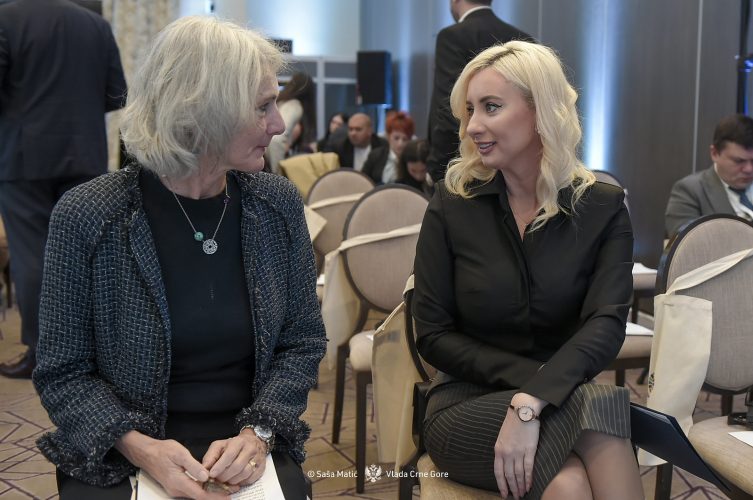
Deputy Regional Representative of FAO for Europe and Central Asia, Nabil Gangi, emphasized that the transformation of agri-food systems is not just an agricultural agenda:
“This is a complex system where issues of climate, health, nutrition, natural resources, and the economy intersect. No challenge can be addressed in isolation; it requires a long-term and systemic approach based on reliable data, coordinated policies, and strong cross-sector cooperation,” Gangi said.

Participants of the dialogue particularly emphasized that sustainable and predictable financing represents a key prerequisite for successful transformation, alongside the need for stronger involvement of international organizations, bilateral donors, financial institutions, and diplomatic partners. It was noted that the transformation of agri-food systems cannot rely on a single document or strategy but requires a long-term process, continuous political dialogue, the involvement of all stakeholders, and clear alignment of national policies with local needs and regional priorities.
Today’s event confirmed that European integration provides a natural framework for improving agri-food systems in Montenegro, and that regional cooperation and exchange of experiences play a key role in accelerating sustainable and inclusive solutions across the Western Balkans.
The event was organized with the support of the Food and Agriculture Organization of the United Nations (FAO) and the UN system, as part of a broader effort to strengthen policies and partnerships for the future of agri-food systems in the region.