



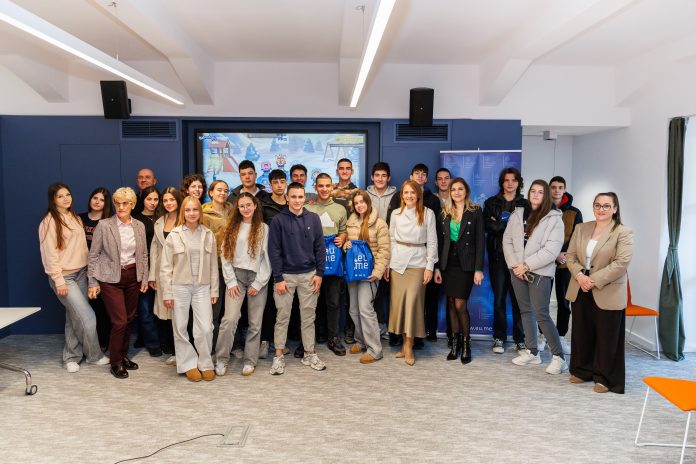

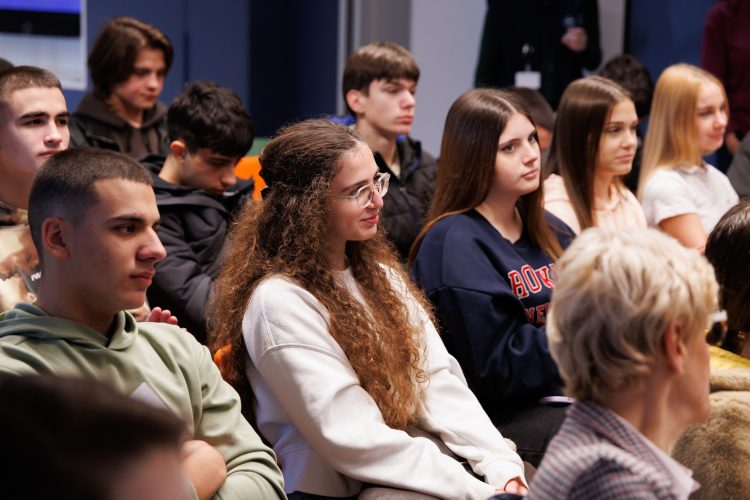
The sea is an inexhaustible source of knowledge and mysteries. Through the workshop “Little School of Fisheries and Healthy Seafood: Discover the Sea and the EU”, second-year students of the Kotor Gymnasium had the opportunity to explore sustainable fisheries, learn about the richness of marine resources, and understand how European policies shape and protect them.

The workshop was organized by the Ministry of European Affairs, with support from the EU Delegation in Montenegro through the EU4ME project, in partnership with the Ministry of Agriculture, Forestry and Water Management, and the Institute of Marine Biology.

Biljana Papović, State Secretary of the Ministry of European Affairs, emphasized the importance of bringing European standards closer to youth and raising awareness about marine conservation.

“Chapter 13 – Fisheries is one of the chapters Montenegro has prepared, fully aligning legislation and rules with the EU Common Fisheries Policy. It is important to explain what concrete changes will occur in this area in the coming period, and the benefits awaiting our fishermen and community members,” said Papović.

Dr Aleksandar Joksimović from the Institute of Marine Biology in Kotor spoke to the students about sustainable fishing and the importance of a diet based on seafood. He presented the most important fish species in Montenegrin waters and how they are used to prepare nutritionally rich meals.
“The best and healthiest fish are actually the most affordable – sardines and anchovies, which are traditionally sold along our coast. These species contain the highest concentrations of omega-3 fatty acids,” Joksimović emphasized.

Joksimović also highlighted the Institute’s key role in monitoring fish stocks in Montenegrin waters.
“We collect samples of all economically important species and carry out a complete biological analysis. The data are sent to the Ministry of Agriculture, Forestry and Water Management, specifically the Directorate for Fisheries, and then forwarded to the European Union and the Mediterranean Fisheries Commission. It is crucial that Montenegro is a relevant partner in this process,” he concluded.
Katarina Burzanović, Head of the Negotiation Team for Chapter 13 from the Ministry of Agriculture, Forestry and Water Management, stressed that the focus of the chapter and legislation alignment is on the conservation of fish stocks and species.

“It is essential to pursue a sustainable policy, meaning we manage resources and the fleet properly, provide accurate data, and ensure that fishermen fulfill their obligations, so that the system works effectively. We must protect the sea from pollution, vessels, microplastics, and other harmful impacts to leave it in the best possible condition for future generations,” explained Burzanović.
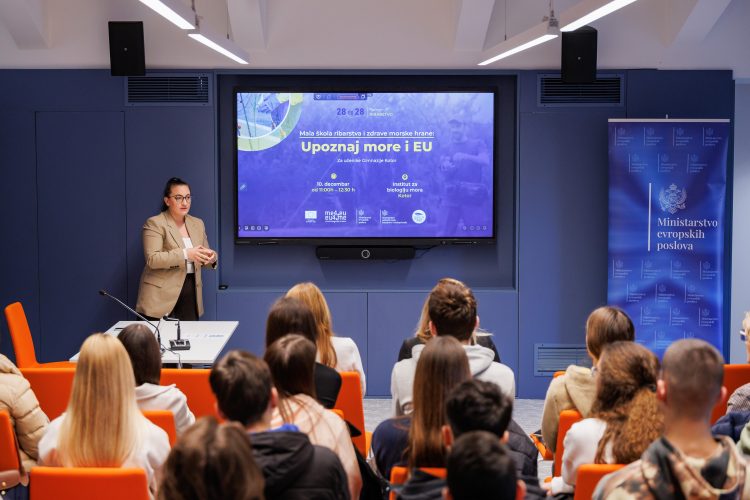
Granica Kovačević Petrić from the Ministry of European Affairs presented European fisheries policies and their significance for the protection of marine resources. The workshop concluded with an interactive online quiz.

The workshop was part of the “28do28” campaign, through which the Ministry of European Affairs and the EU4ME project bring citizens closer to the benefits of closing negotiation chapters on Montenegro’s path to the European Union.