




- Estonia is one of the smallest EU member states by population. How is the “voice of a small state” experienced in practice within the institutions of the European Union? Does size limit a country’s influence, or can it sometimes even make it easier to operate within the EU system?
The European Union’s (EU) institutional design ensures that Estonia’s and other small states’ positions are taken into account. Of course, size can sometimes limit a country’s influence, but being an EU member state make our voice better heard, both in Europe and across the world, compared to not being part of the EU. Also, belonging to the EU is an opportunity to gain supporters to our initiatives that might eventually shape broader European – or even global – agendas. Last but not least, being a small state does have its pros – for example, we take and implement decisions faster.
- In candidate countries, concerns are often raised about the potential loss of sovereignty through EU membership. How does Estonia view the relationship between national sovereignty and the sovereignty transferred to the EU? What does this look like in practice?
This topic has always been under debate in all candidate countries before joining the EU, including in Estonia. Now, after becoming a member state, we can say with confidence that in the EU, we are amongst like-minded friends. Everyone gives their effort to create a better tomorrow, while retaining their authority over key national issues. On trade and economic policy, there are some constraints, but they serve to ensure stability among member states, as well as to secure better outcomes from trade agreements by acting as a bloc. The EU membership also ensures that Estonia will never stand alone again.
- How does Estonia balance preserving a strong national identity, language, and cultural distinctiveness with belonging to a shared European identity? Do you think that this sense of identity within the Union is becoming stronger?
I would say that our identities as Estonians and as Europeans are coexisting and overlapping. EU values diversity and protects national identities. For example, the EU has 24 official languages and Estonian is one of these. This principle of multilingualism aims to enable the EU to communicate with its citizens in their own language. The sense of European identity is already high, but my personal feeling is that it is growing within the population, especially among these young people that grew up during the times when Estonia was already part of the EU and who cannot imagine their lives without the four freedoms.
- From Estonia’s perspective, what have been the most tangible economic benefits of EU membership—particularly in terms of citizens’ living standards, investment, the labor market, and the development of the private sector?
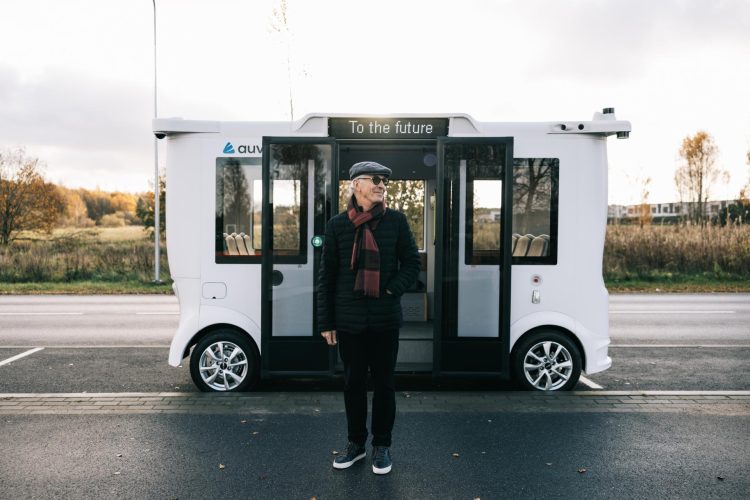
From Estonia’s perspective, EU membership has brought very tangible long-term gains in prosperity, resilience and economic modernization. For citizens, the clearest result has been a significant rise in living standards. By the figures you shared, Estonia’s GDP per capita has roughly quadrupled since joining the EU in 2004. Wages have increased around fivefold, pensions have risen substantially, and absolute poverty has fallen sharply – from 14.3% in 2004 to 3.4% in 2024. EU funding has also had a visible impact across the country. Structural and cohesion funds have helped modernize infrastructure, healthcare, education and digital connectivity. At the same time, access to the single market and alignment with EU rules made Estonia much more attractive to investors. This has helped to drive strong foreign direct investment, particularly from the Nordic countries, and supported growth in sectors such as finance, manufacturing, logistics and IT. In the labour market, EU membership has expanded both mobility and opportunity. Estonians have been able to work, study and build careers abroad more easily, while Estonia itself has become more integrated into the wider European labour market and better able to attract skills from elsewhere in the EU. That has supported wage growth, knowledge transfer and broader business development. Common European rules have also created a more stable and predictable framework for both workers and employers. For the private sector, the most important effect may be structural. EU membership helped transform Estonia from a small post-transition economy into a more mature, export-driven market economy that is deeply integrated into European value chains. Estonian firms gained access not only to customers, but also to capital, legal certainty, common standards and long-term partnerships. This is especially visible in technology and digital business, where Estonia has built a strong international profile. In that sense, companies like Wise and Bolt are not exceptions — they are examples of what becomes possible when firms from a small country can build from day one inside a large integrated market.
- How do Estonian companies and citizens make use of the benefits of the European single market today? Are smaller economies on an equal footing with larger ones within this framework?
The EU opens a variety of doors for all Estonian citizens. They can study, work, participate in exchange programmes and internship schemes across the entire union. Roughly 10% of Estonians currently work or study in another EU member state. The lack of restrictions on movement make it easier for Estonians to pursue their passions across the European Union. Estonian companies, especially in tech and digital services, often operate across the EU from day one. The single market allows them to sell services across member states without setting up separate legal structures in every country and common rules such as GDPR make scaling much easier. For a small and open economy like Estonia, this matters enormously. The single market removes many of the barriers that would otherwise make cross-border growth slow, expensive and complicated. That is one reason why firms like Wise and Bolt were able to grow so quickly across Europe. But the benefits are not limited to digital business. Traditional sectors such as timber, electronics and food exports also benefit from tariff-free trade and simpler logistics within the EU. Moreover, common standards build trust between producers, consumers and regulators. They make it easier for goods and services from a small country like Estonia to be accepted across the EU without having to prove themselves from scratch in every market. Therefore, for Estonia, with its very small domestic market, access to the single market is not just helpful — it is fundamental. It effectively gives Estonian companies access to more than 500 million consumers.

Overall, the single market gives Estonian companies and citizens access to the same economic space as those in much larger countries. For a small state, that is a major advantage. The single market is rules-based and non-discriminatory, which means an Estonian company has the same legal right to do business in France, Germany or Spain as a local company does. The same competition rules apply across the EU, regardless of the size of the member state. Of course, larger economies still benefit from scale, but smaller economies can also have their own advantages. Estonia, for example, is often able to adapt quickly to regulatory change, and because its domestic market is limited, its companies tend to internationalize earlier and think cross-border from the outset. Estonian firms can also draw on EU funding programmes and cross-border investment networks, including venture capital. So the playing field is not identical in every practical sense, but the single market gives smaller countries a far stronger position than they would have outside it.
- Estonia is often cited as a leader in digital governance within the EU. To what extent has EU membership contributed to this digital transformation, and has the EU framework helped or hindered innovation?
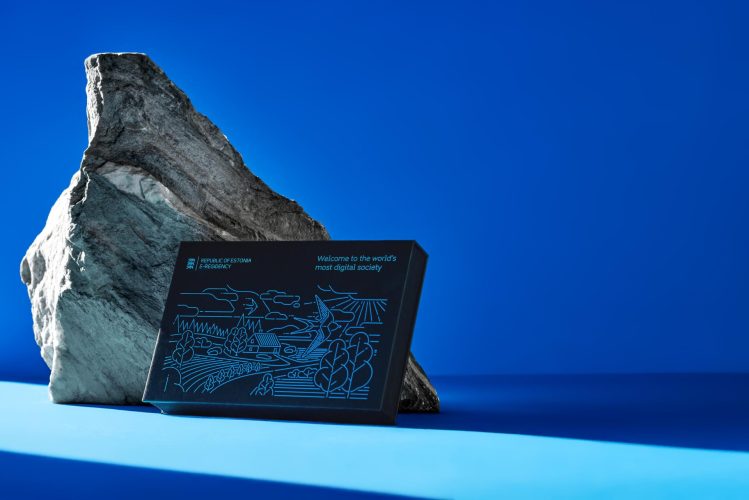
The EU membership has significantly helped to accelerate Estonia’s digital transformation. Through investment schemes and funding, Estonia’s digital economy has been able to grow and expand across borders and boost domestic innovation. For example, Estonia’s flagship e-Residency programme allows Estonia to offer a secure, government-issued digital identity, enabling entrepreneurs worldwide to establish and manage EU-based companies entirely online. This would not be possible without access to the single market. On the other hand, EU’s own initiatives on digital governance and regulation of digital services reinforce Estonia’s long‑standing vision for secure digital identity and its continued development.
- Given Estonia’s geopolitical position, to what extent has EU membership contributed to strengthening national and regional security?
EU membership gives Estonia a direct role in shaping the Union’s foreign and security policy. Russia’s aggression against Ukraine remains our central security challenge as it poses a long-term security threat to all of Europe, and acting through the EU has strengthened our ability to respond effectively. Together with our partners, we have pushed for stricter sanctions on Russia, reduced the mobility of Russian citizens within the Schengen area, and gathered greater political, financial, and military support for Ukraine. A weaker Russia and a stronger, more resilient Ukraine enhance Estonia’s and Europe’s security as whole. The EU’s recent security and defense initiatives, along with increased investment in Europe’s broader security architecture and deterrence capabilities, also bring concrete benefits to us. Our membership, and our consistent cooperation with other EU countries, ensures that Estonia is never left to face security challenges alone.
- Based on Estonia’s experience, what would you highlight as the most important message for Montenegro, as the most advanced candidate for EU accession—especially when it comes to the long-term benefits for citizens?
My message is that your patience and hard work on reforms pays off. We have seen it in practice in Estonia. Joining the EU will bring Montenegro and its citizens tangible economic gains, but the most important benefit is not something one can measure in numbers – it is being part of a union based on values and identity, working together for peace, security and prosperity.
The interview was conducted as part of the “Openly About the EU” campaign, led by the Ministry of European Affairs with the support of the EU-funded EU4ME project.