



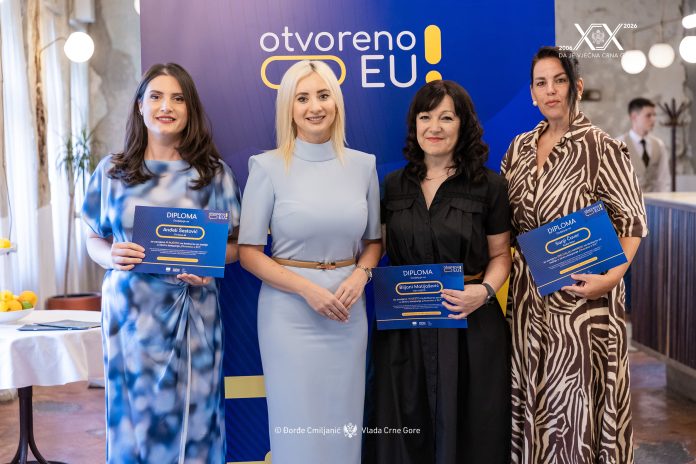

Minister of European Affairs Maida Gorčević presented awards to the authors of the best journalistic stories produced as part of the “Openly About the EU” campaign.
The first prize was awarded to Biljana Matijašević, a journalist from Vijesti, for her story examining the position of small EU Member States and whether they truly have equal influence when key decisions are made at the European Union level. In her report, Matijašević demonstrated that small countries, such as Montenegro, do not have to follow the positions of larger Member States and are able to represent their own interests on an equal footing.
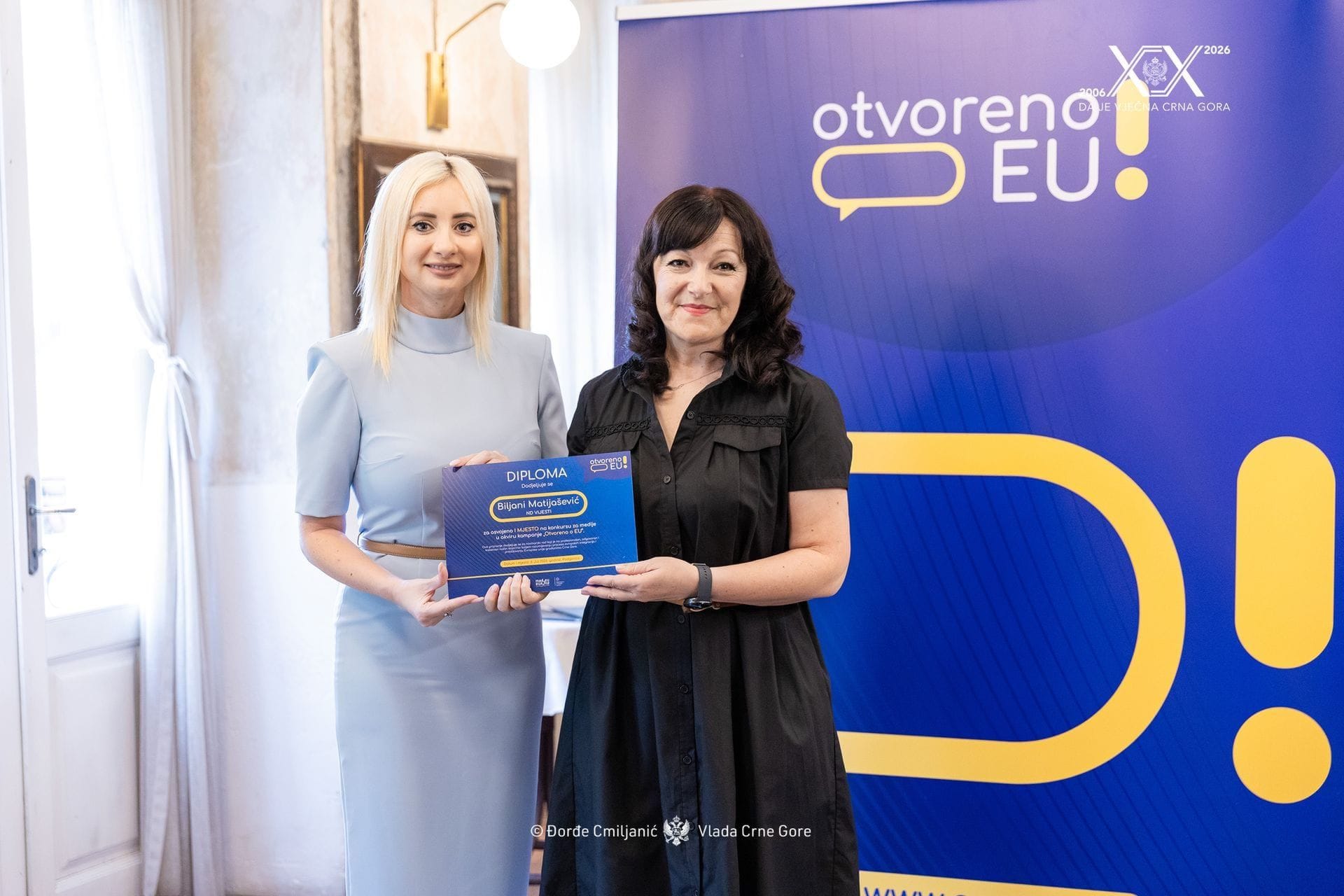
According to the jury, the winning story addressed the topic in a comprehensive, analytical and clear manner, providing a broader picture of the political and economic position of small Member States in the European Union through the experiences of existing smaller Member States and the lessons Montenegro can draw from them.
The second prize went to Bojana Milićević of Radio Montenegro for her story on the impact of EU membership on small-scale producers. Through interviews with domestic producers and the experiences of their counterparts from neighbouring countries already operating on the European market, the author demonstrated that success depends on quality, authenticity and the ability to meet market requirements.
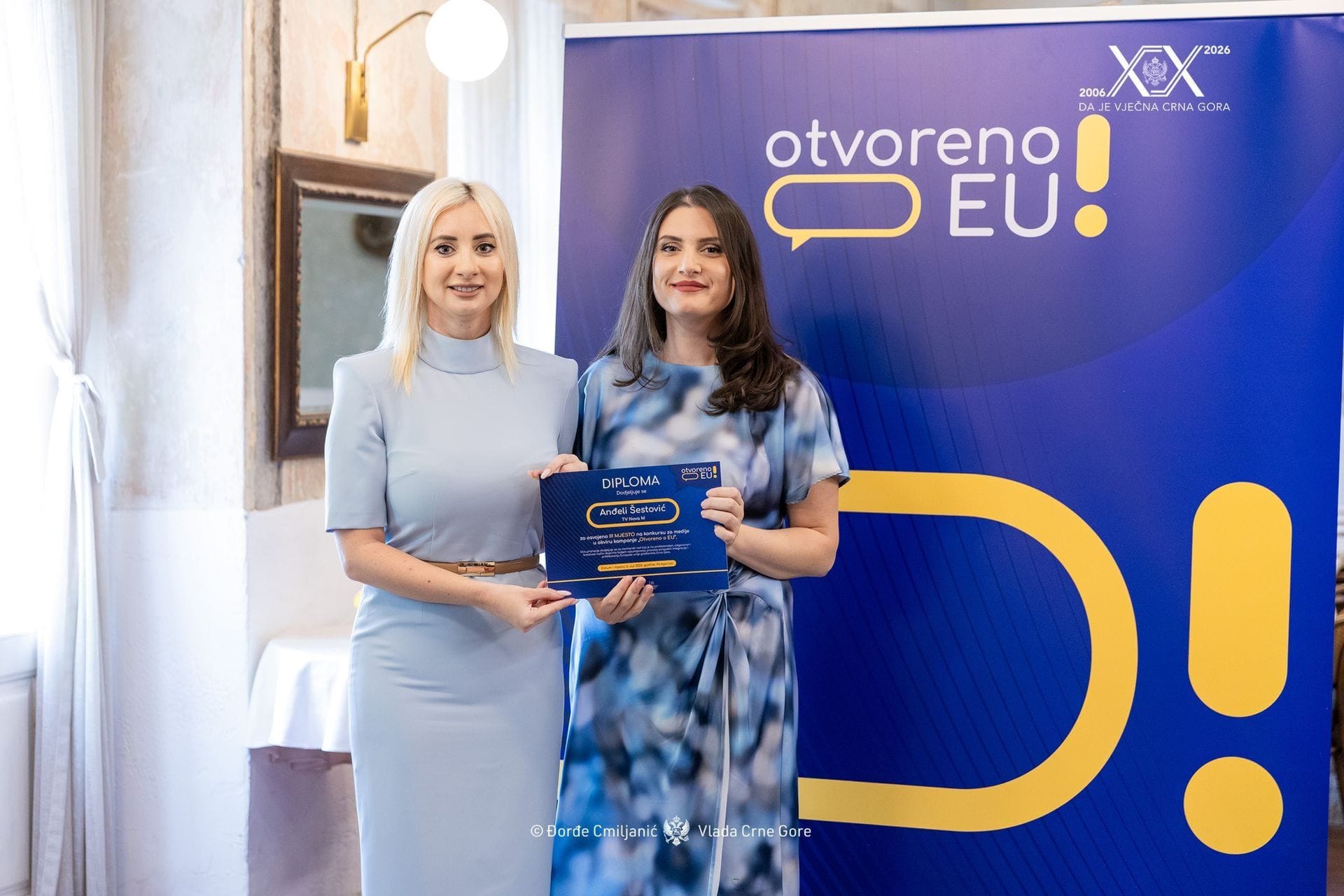
The third prize was awarded to Anđela Šestović of TV Nova M for her story on the migration of young and skilled workers from Montenegro to other EU Member States following accession. Supported by data, personal experiences and an overview of the current situation, the report explored the issue through a clear structure and well-founded arguments.
Given the high quality of the entries submitted, the Ministry of European Affairs decided to present a Special Award this year for contributing to a better understanding of the European integration process at the local level. The selected story, authored by Sanja Čavor of Radio Kotor, offers a well-argued and optimistic perspective, together with practical guidance on how local beekeepers can prepare for the European market by drawing on the experience of neighbouring Croatia.
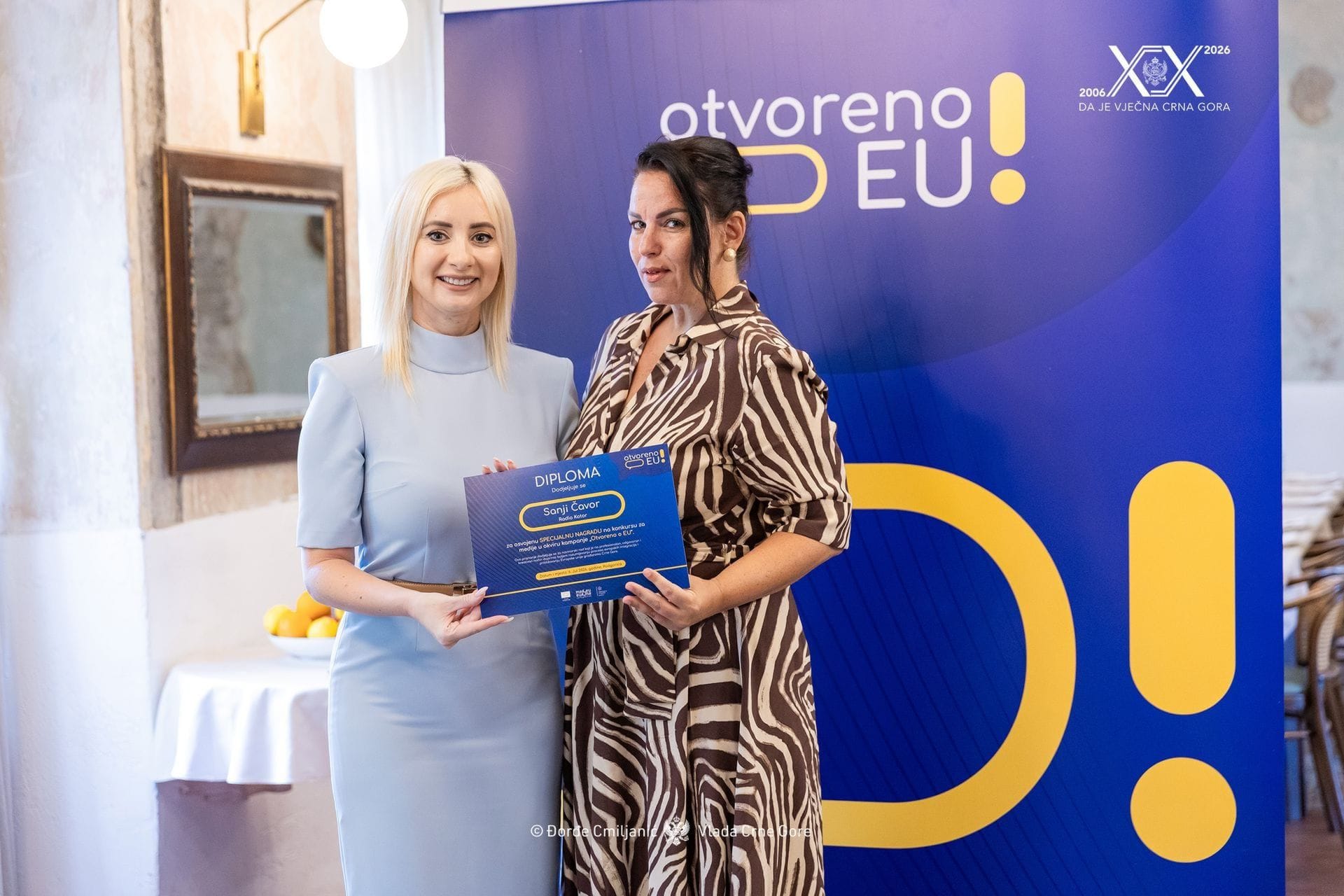
Addressing the competition participants, Minister of European Affairs Maida Gorčević said that the journalists had covered the topics introduced through the “Openly About the EU” campaign in a thorough and engaging manner.
“I am particularly pleased that you have shown that European integration does not have to be a complicated political topic, but something that can be discussed clearly, simply and in a way that is accessible to citizens,” Gorčević said.
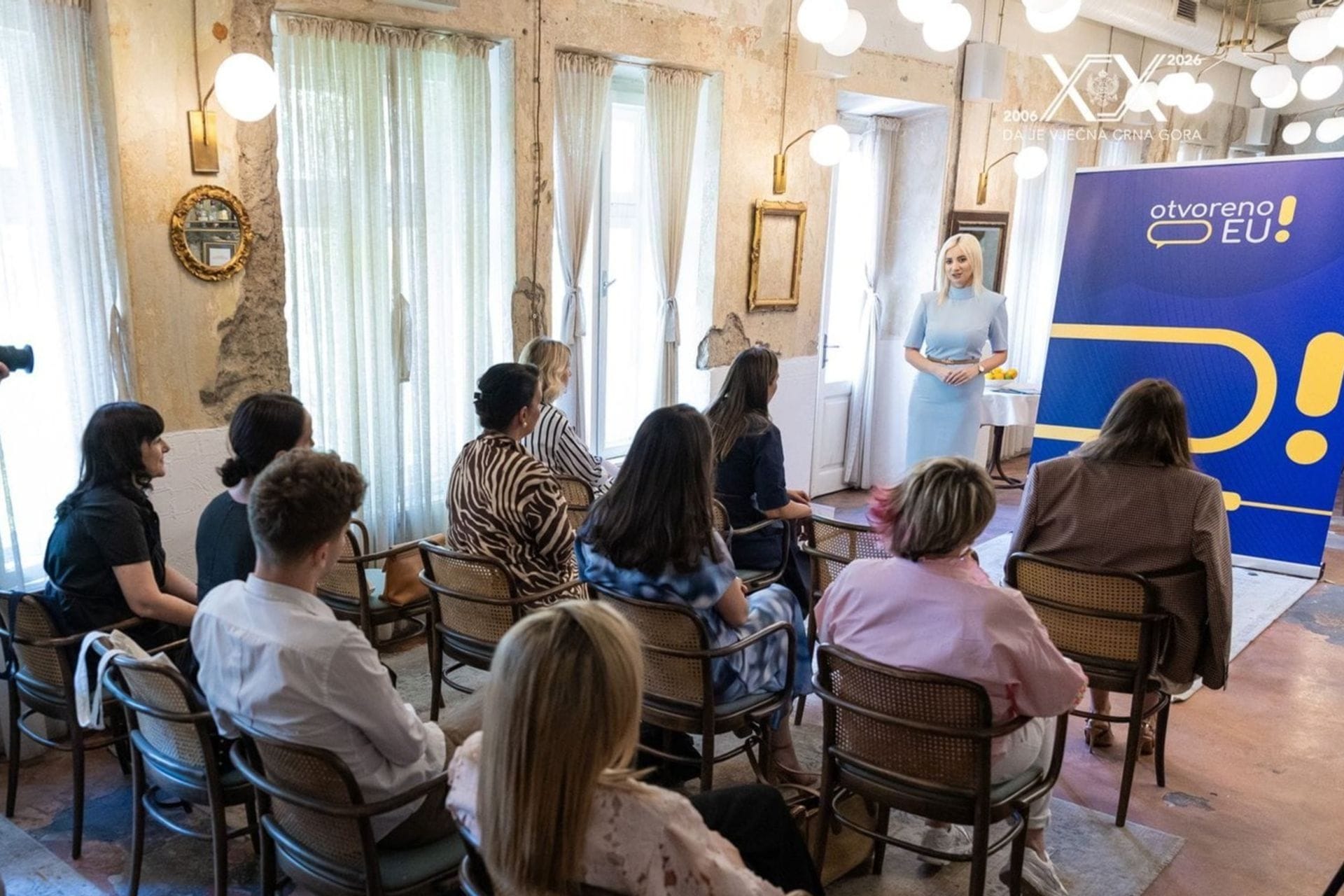
She stressed that it is important to discuss all topics openly and on the basis of facts, allowing citizens to form their own opinions.
Accepting the award, Biljana Matijašević said that, as a journalist who has followed the European integration process for many years, she wanted her story to explore and present comparative experiences regarding the position of small states within the European Union.
“We will have the same rights as Germany or France. We will have a representative in the Council of the European Union, which means that if we disagree with something, we will not have to support it—we will have the right to veto,” said Matijašević.
Anđela Šestović said that her story aimed to highlight that Montenegrin citizens are studying and working across the European Union and that, with their knowledge and experience, they can contribute to improving Montenegro.
“I also wanted to point out that there is a place for them in Montenegro as well, but that our institutions need to do their part to make it easier for these people to decide to return to their home country,” Šestović said.
Radio Kotor journalist Sanja Čavor said that through her story she wanted to shed light on the work of beekeepers from the Bay of Kotor and Montenegro, as well as on small entrepreneurs across the country, demonstrating how beekeepers have used EU funding and European Union support to develop and brand their honey, beekeeping products and apiaries.
“I found the experience truly fascinating. I was especially pleased to have the opportunity to hear how beekeepers in Slovenia, particularly in Ljubljana, approach this work. They offered us a new perspective and valuable insights, especially because they practise urban beekeeping. The experiences of the region provide encouragement and inspiration for the beekeepers of the Bay of Kotor as Montenegro approaches EU membership,” Čavor said.
The competition, which ran from 27 April to 12 June 2026, attracted 14 journalists from local and national television, radio, print and online media, who submitted a total of 15 stories.
The three best entries received cash prizes of EUR 500, EUR 400 and EUR 300, while the Special Award also carried a prize of EUR 300.
The competition was organised as part of the EU4ME Project, funded by the European Union.