



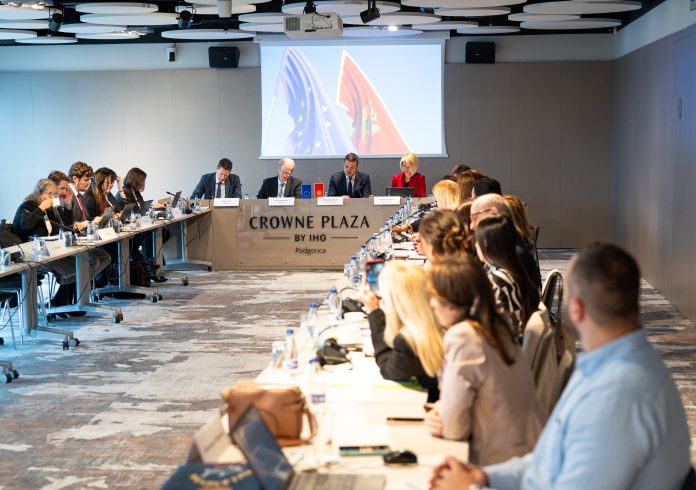

Thanks to extensive reforms and achieved results, Montenegro has entered a new phase of economic transformation. Stable public finances, rising employment, strengthened institutions, growing investment flows, and a resilient financial sector demonstrate that Montenegro is successfully moving from a recovery period to sustainable development and European convergence, it was stated at the 18th Subcommittee meeting between the European Union and Montenegro on Economic and Financial Affairs and Statistics, held today in Podgorica.
The Subcommittee meeting was opened by Chief Negotiator Predrag Zenović, and co-chaired by State Secretary at the Ministry of European Affairs, Bojana Bošković, on the Montenegrin side, and Kristof Zurek from the Directorate-General for Enlargement and Neighbourhood, and Andras Tari from the Directorate-General for Economic and Financial Affairs, on the EU side.
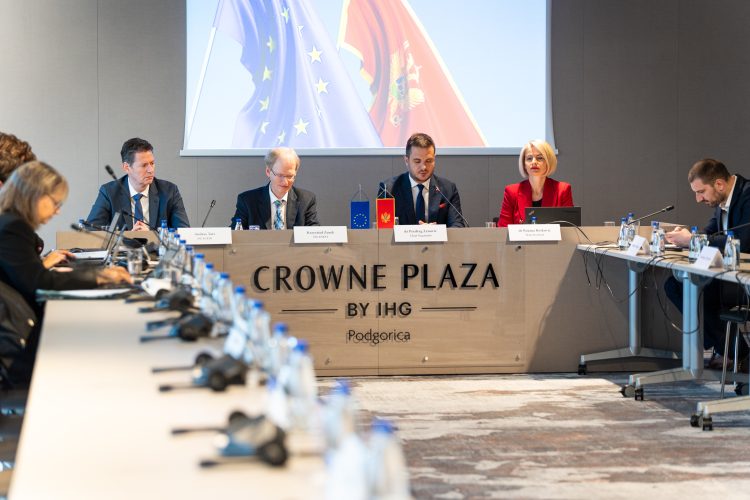
Opening the meeting, Chief Negotiator Predrag Zenović stated that for Montenegro, European integration is not only a foreign policy priority but a central framework guiding the transformation of the economy, public administration, and society as a whole.
“Montenegro enters this process with a clear ambition: to ensure readiness for EU membership by 2028. Our commitment to economic and fiscal reforms aims to secure sustainable public finances, open and competitive markets, and transparent and efficient institutions,” Zenović said.
The Chief Negotiator emphasized that Montenegro continues to progress toward a functional market economy.
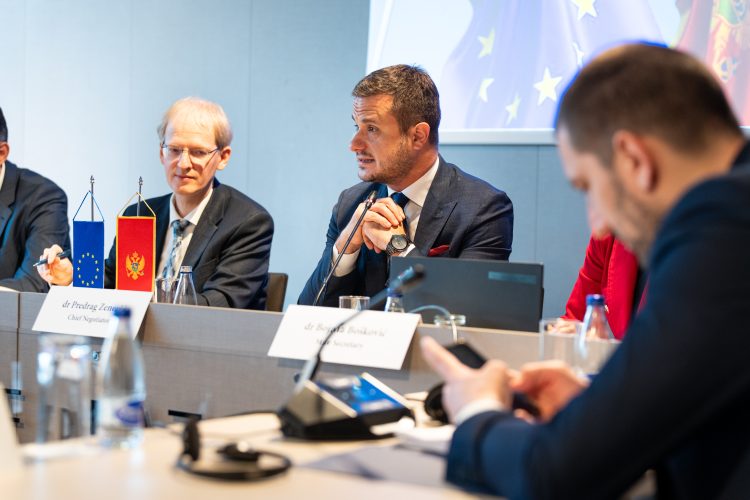
“Economic growth remains positive, the banking sector is well-capitalized and liquid, and labor market indicators are steadily improving. Montenegro has taken important steps in improving the business environment, reforming state-owned enterprises, and strengthening its capacity to respond to competitive pressures, particularly through digitalization, vocational education, and the green transition,” Zenović stated.
He presented to the EU representatives the achieved progress and remaining obligations in Chapters 17 – Economic and Monetary Policy, 18 – Statistics, 32 – Financial Supervision, and 33 – Financial and Budgetary Provisions.
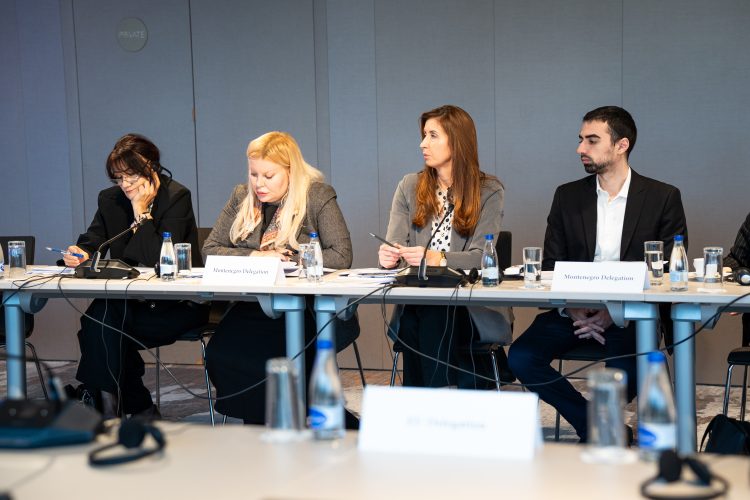
State Secretary Bojana Bošković said that in 2025, the Montenegrin economy continued to show solid growth and resilience, with GDP increasing by 3.5% in the second quarter, surpassing the average growth in both the EU and the Eurozone.
“The labor market also recorded historic progress: unemployment fell below 9%, the lowest rate in over a decade, while the average net salary reached €1,011 — an increase of more than 20% compared to the previous year. Positive labor market trends continue, with employment rising by 4.8%,” Bošković noted.
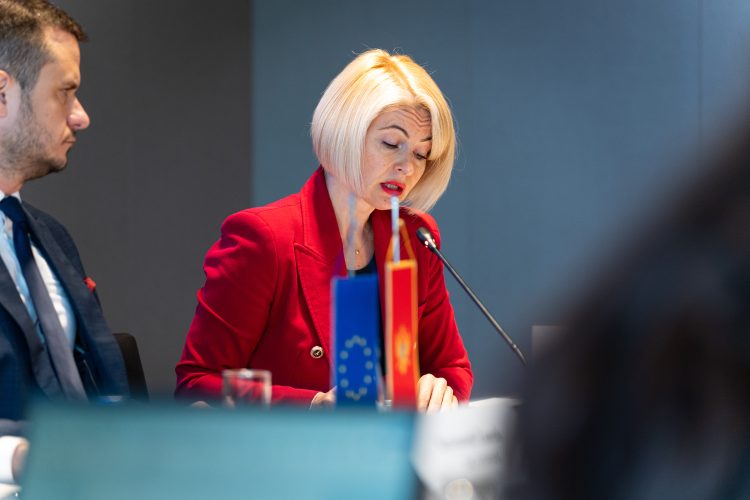
She emphasized that tourism, construction, and services continue to drive growth, while investments remain a vital pillar of long-term development, particularly supported through infrastructure and energy projects backed by the EU.
Bošković added that total revenues increased by 1.2% compared to the previous year, while public debt remains stable at 60.08% of GDP, with a clear commitment to further reduction through improved debt management.
“Montenegro continues to strengthen transparency and accountability in public finances through rigorous auditing and control mechanisms. At the same time, reforms in the business environment, including the simplification of administrative procedures, digitalization of services, and strengthening legal protection for investors, support private sector growth and enhance Montenegro’s attractiveness as an investment destination,” Bošković stated.
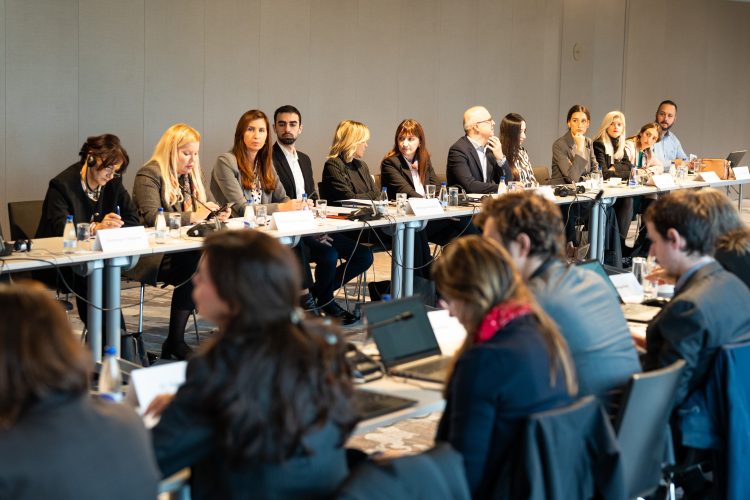
Kristof Zurek from the EC Directorate-General for Enlargement and Eastern Neighbourhood Policy, emphasized that the Subcommittee meeting takes place at the most dynamic moment of Montenegro’s accession negotiations, noting that Montenegro is on track to meet its ambitious goal of closing all negotiation chapters by the end of 2026. He confirmed that Montenegro is on track to close at least five chapters by the end of this year and praised Montenegro’s strong efforts in the areas covered by this Subcommittee, while stressing the need to intensify efforts in all remaining chapters in the coming period. He also highlighted the recently adopted Position and Report for Chapter 32 – Financial Supervision.
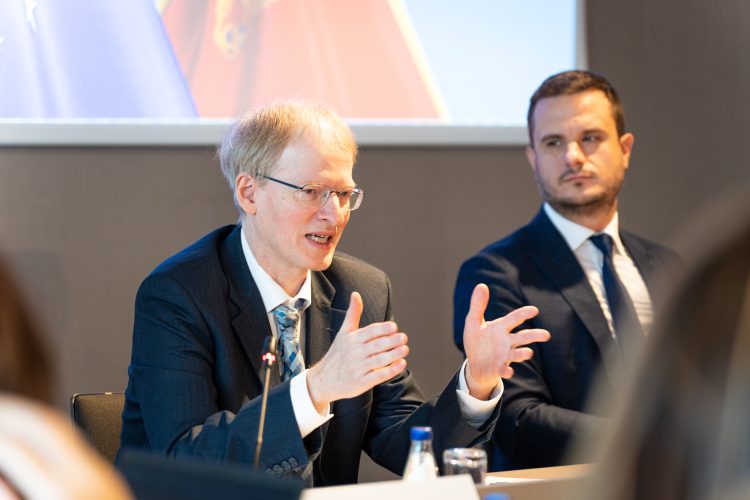
Andras Tari from the Directorate-General for Economic and Financial Affairs highlighted excellent cooperation with Montenegro regarding economic criteria and the chapters under the Subcommittee. While noting that further progress is needed, he welcomed the positive trend in most key indicators, as reflected in the 2025 EC Report on Montenegro. He particularly emphasized the importance of reduced public debt, stressing that Montenegro must continue aligning with EU fiscal rules to enter the Union with stable and responsible public finances.