



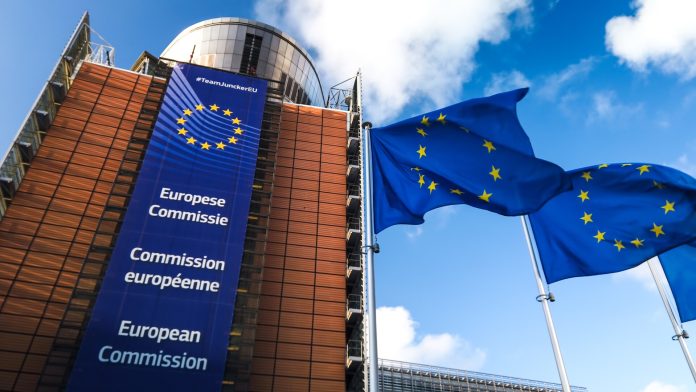

Drafting of the Treaty on Accession of Montenegro to the European Union requires first the establishment of an appropriate work group that will elaborate technical details, while the European Commission is willing to provide support in this process. That is what the EU headquarters in Brussels says for Eurokaz, commenting on the initiative to start drafting the Treaty on Accession of Montenegro to the European Union soon.
Speculations about the beginning of the work on the Treaty on Accession of Montenegro to the European Union started months ago. Although none of the treaty parties is sure at this point what the document will look like, there are already some speculations about what provisions it will contain, what will be different from the latest treaty signed in 2011 and who it will favour more, Brussels or Podgorica.
When it comes to point of drafting the treaty, the public gets the impression that the country is already almost there, reaching the membership in the EU. However, the experience from earlier enlargements and current political circumstances in Brussels show that this is a far more complex process, that will in the case of Montenegro probably open a completely new chapter in the history of EU enlargement.
What is the Accession Treaty?
Accession Treaty is the final, legally binding document that in a formal manner concludes the negotiations between European Union and a candidate country. It defines conditions under which the country becomes a member state, but also all transitional arrangements, exceptions and safeguards that might apply even after the membership in the Union.
In other words, during the negotiations, the discussions are about laws, reforms and chapters, but the Accession Treaty is the moment when all of that is “locked” in one document that then must be ratified by all member states of the EU, and the country acceding the EU. Therefore, in European circles this Treaty is frequently described as a political-legal bridge between the candidate status and full-fledged membership.
European Commission says that Montenegro has achieved a significant progress towards the accession, closing four negotiation chapters last year.
“Commitment of Montenegro to temporarily close additional chapters by the end of 2025 reflects its commitment to European integration. Keeping stable progress in reforms and continuous seeking of a broad political consensus are of key importance for achieving the country’s goal to conclude the accession negotiations by the end of 2026, said Guillaume Mercier, spokesperson of the European Commission.
He says that, if Montenegro keeps the current pace of reforms, it is on the good path to meet this ambitious goal. As for the Accession Treaty, Mercier says that the Commission is ready to provide support in the process.
“Drafting of the Treaty on Accession requires first the establishment of an appropriate work group that will elaborate technical details, while the European Commission is willing to provide support in this process. Establishing the work group will require a decision of the member states. This does not prejudge the outcome of the discussions on temporary closing of the negotiation chapters”, says our collocutor.
Neighbour’s experience
Experience of Croatia, the latest county to join the EU, has shown that drafting of the treaty does not happen in the very finish of the negotiations but earlier than it is commonly thought. Work group of the Council of the EU for drafting the Croatian accession treaty was formed in December 2009, while the treaty was signed two years later, on 9 December 2011.
This means that, already in 2009, the EU considered it to be politically realistic to start the technical and legal work on the document, although the negotiations were formally not finished at that time. It is precisely that time period that serves as an orientation point in the estimates of when the similar process might start for Montenegro.
It has been two decades without any new accession treaty since the Croatian treaty was signed in 2011. If the start of drafting this document for Montenegro is connected with 2026, this will be the first accession treaty after almost 15 years.
In the meantime, in the decade behind, the EU faced multiple crises at home. Financial crisis, Brexit, pandemic, and, in the end, the war in Ukraine, led to the discussion of the EU’s own future. Although the document about reforms in the EU and preparations for enlargement are being postponed from one month to another, it is clear that the new generation of accession treaties will have a different response to security, political and institutional challenges.
For now, it is certain that the future treaty will contain strong safeguard mechanisms and transitional periods. This was confirmed recently by the European Commissionaire Marta Kos, when she emphasized that the scope of such measures would be the matter of negotiations with the Member States.
“The scope of the so-called safeguard measures or transitional periods will be established in the Accession Treaty. That will be the matter of negotiations between your country and the Member States. On the other side, sometimes the safeguard measures do not protect only the European Union, but your country too. Almost every candidate country asks for transitional periods, which means that the country gets more time or years to handle, do or align some things… So, in this respect, I cannot say what measures and what transitional periods will be there for Montenegro. But what I can say is that we have not yet discussed it. I know there are rumours that the new members, Montenegro being the first of them, will not have the right of veto. This has not been discussed yet. Such a thing would mean that we have two classes of member states of different levels and I do not like that idea. I want Montenegro to sit at the table on an equal footing with all member states, and not in the second-grade part without any right to say anything. But I want to repeat, we are yet to see what will be in the Accession Treaty,” said Mrs Kos.
Still, the key question remains – how to fit in the enlargement into the EU that has not yet implemented its own internal reforms. This is precisely where the key uncertainty lies, because the Union expresses political will for enlargement, but at the same time postpones the answer about changes that would make it more functional if it had more members.
And the fact that the process is technically demanding, but also politically sensitive, is underlined also by Ivan Mijanović, the correspondent of the Radio and Television of Montenegro from Brussels. He says that, before drafting of the accession treaty starts, methodology has to be defined and the key principles of the future accession treaties must be clarified.
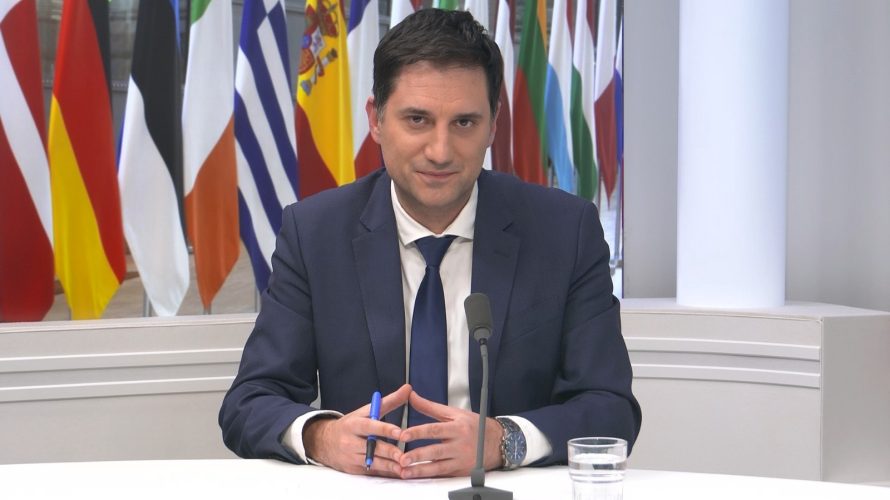
“Establishment of the ad hoc group can be expected when Montenegro closes more than a half of the negotiation chapters, probably in the first half of the next year. On the technical side, the dynamics of closing of the chapters is mostly respected, but a clearer response of the EU is still waited for”, says Mijanović.
It is certain, says Mijanović, that the country has so far consistently implemented the roadmap for closing the chapters that was defined in mid 2024.
“The beginning of the next year could, namely, bring closing of the chapter 32 (Financial control), since the draft of the joint position for that chapter has already been submitted to the Work Group for Enlargement in the Council of the EU. In addition to this, Montenegrin administration has recently published that, during the first months of 2026, the chapter 21 (Trans-European networks) could be closed too. It is expected that the first quarter could also bring closing of the chapter 1 (Free movement of goods). So, it can be concluded that, from the technical point of view, the planned dynamic has been kept. However, the response of the EU is still waited for”, says Mijanović.
Our collocutor reminds also that the recent Summit of the EU confirmed a “clear and unambiguous support of the EU leaders to the Western Balkans”.
“Actually, they sent the message that EU wanted to enlarge but still did not know how. The internal reforms are being postponed from one month to another, while candidate countries anxiously await to see to what extent Brussels will be creative in terms of “transitional periods” and monitoring”, Mijanović thinks.
Safeguards as a part of the document
Mijanović thinks that “The new generation of Accession Treaties”, as the new treaties for Montenegro and the other candidate countries are called in some of the Member States, will certainly contain strong safeguards that match the challenges that the Union is faced with.
“The safeguards will primarily refer to the field of the rule of law, while the transitional periods could include the areas like free movement of workers and services, as was already the case in the latest enlargement waves (Bulgaria and Romania in 2007, and Croatia in 2013). There is also the unavoidable topic of limiting the veto right, that is currently not “popular” among the members of the Commission, because it would mean the existence of the Members States of the first and second class,” concludes Mijanović.
All of this shows that the Accession Treaty of Montenegro will not only be a technical finalization of the long negotiation process. It might become the first test of the new enlargement philosophy of the EU that guarantees credibility of the Union and equality of the future members at the same time. In the case of Montenegro, the Accession Treaty will not only be a confirmation of membership, but also the answer to the question of what kind of European Union Brussels wants in the years to come.
By: Jovana Đurišić
This text was published in the 17th issue of Eurokaz magazine.