



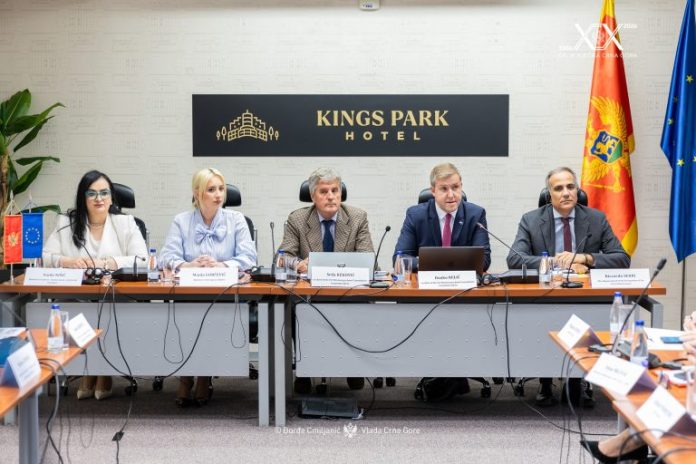

The twenty-second meeting of the Joint Consultative Committee between the European Union and Montenegro is being held today in Podgorica.
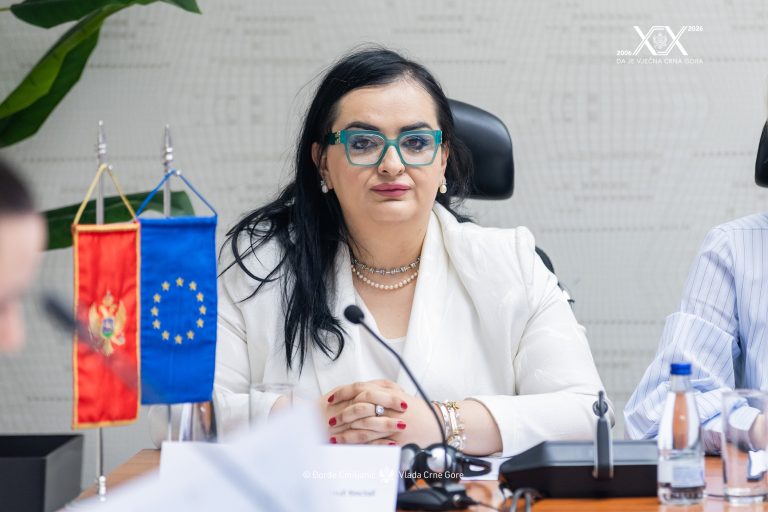
Opening the meeting, Minister of European Affairs Maida Gorčević stated that the start of drafting the Accession Treaty represents the final phase of the negotiation process and a clear signal that Montenegro’s membership in the European Union is a goal that will be achieved in 2028.
“Alongside the closing of negotiation chapters, the drafting of the Accession Treaty directly determines the dynamics of our entry into the European Union and confirms that we are running the final lap of a fourteen-year marathon on the path to the EU,” the Minister said.
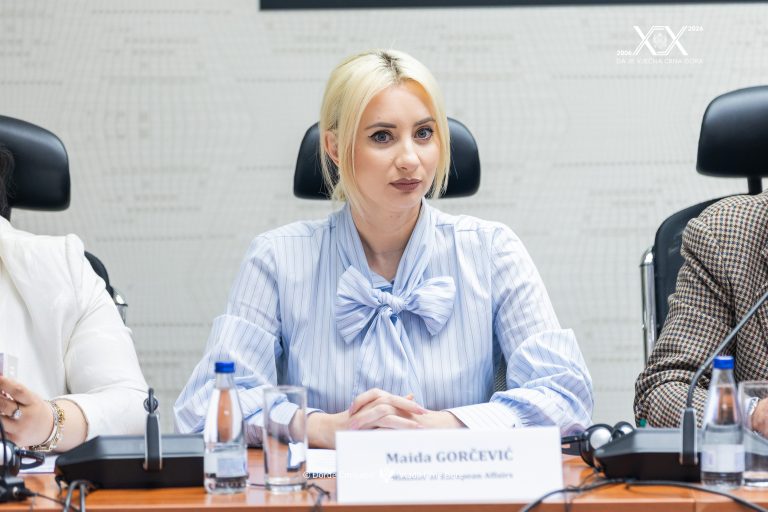
She emphasized that, from the very beginning, civil society has had an important and recognized role in the negotiation process, and that civil sector representatives, through participation in working groups, actively contribute to the quality of reforms and the overall accession process.
“I believe that Montenegro’s European path must be a project of the entire society. This implies not only a critical approach, but also the responsibility to jointly recognize and affirm the successes that bring us closer to membership and to promote Montenegro as the next EU member. In this way, we further strengthen the credibility of our policy and contribute to creating a positive image of Montenegro’s readiness for membership,” Gorčević said.
The Deputy Head of the Delegation of the European Union in Montenegro, Ricardo Serri, stressed that Montenegro has a historic opportunity to bring the EU accession process to an end.
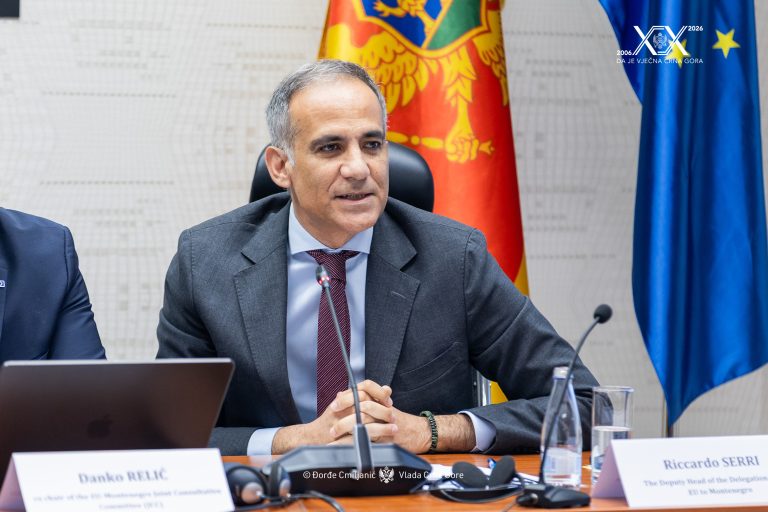
“Montenegro has a historic opportunity to bring its accession process to the European Union to an end, but there is no time to waste — progress now depends on the implementation of concrete reforms in the coming months. This process must be driven not only by institutions, but also in partnership with civil society, whose engagement is key to ensuring that reforms bring real benefits to citizens and the economy, with strong support from the European Union in this final phase,” Serri stated.
The EU co-chair Danko Relić said that the Joint Consultative Committee between the EU and Montenegro continues to play a key role in strengthening dialogue between institutions, social partners, and civil society in the EU accession process. He noted that the strong political commitment is particularly encouraging, confirmed by the participation of high-level government representatives.
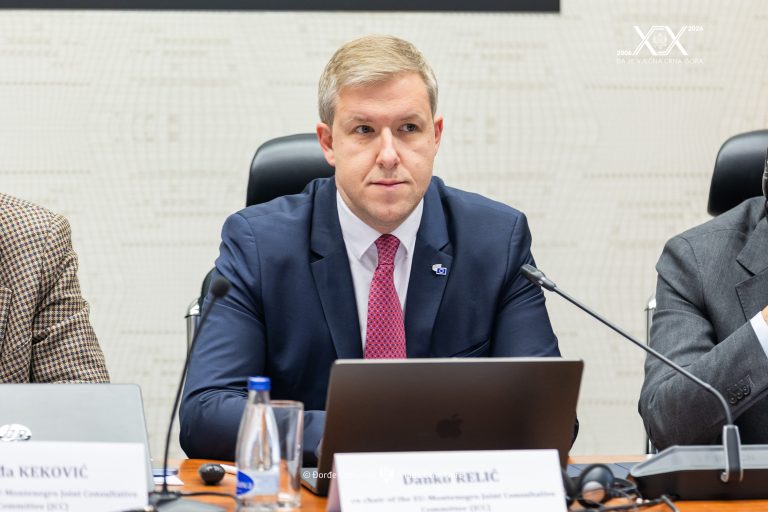
“In light of the latest developments, including the formation of the Working Group for drafting the Accession Treaty, it is clear that the accession process is entering a more mature and concrete phase. At the same time, it is important to emphasize that enlargement is not exclusively a technical process, but also a strategic and geopolitical issue that implies the contribution of candidate countries to the security of the European Union, strengthening resilience, especially in the context of increasingly pronounced external influences, and the preservation of democratic values,” Relić said.
The co-chair of the ZKO from the Montenegrin and European side, Srđa Keković, said that the negotiation process has lasted quite a long time, but that Montenegro is today closer than ever to its goal.
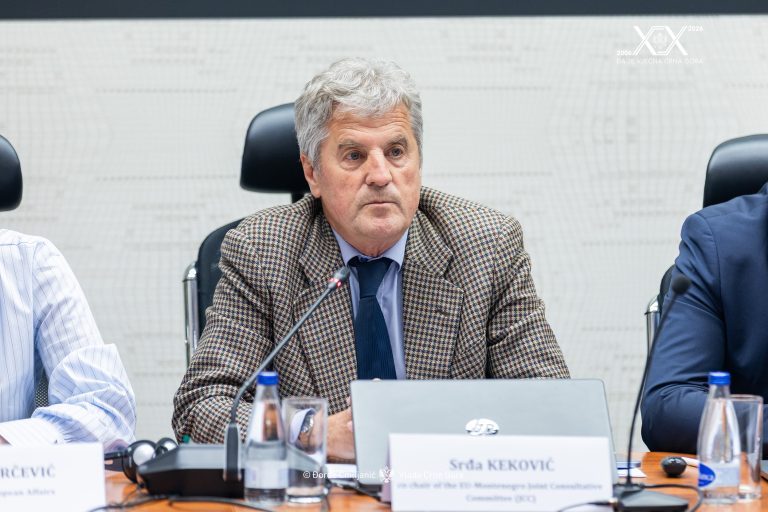
“Today, our Joint Consultative Committee begins its two-and-a-half-year mandate, with the conviction that before it ends, Montenegro will become the 28th member of the European Union. This is also confirmed by the formation of an ad hoc working group for drafting the Accession Treaty of Montenegro to the European Union, which represents a clear signal from European partners that our negotiation process is being brought to a close. Therefore, we call on all decision-makers, especially in the Parliament and the Government of Montenegro, to set aside their political and other interests for a moment and focus on meeting deadlines in fulfilling the final benchmarks in the remaining chapters, in order to meet citizens’ expectations that our country will join the European Union by 2028,” Keković said.
Representatives of the civil sector, Dejan Milovac (MANS), Dragana Jaćimović (Institute Alternative), and Vesna Daković (MBA), spoke about the current state of the Reform Agenda and the Growth Plan for the Western Balkans, as well as the fulfillment of interim benchmarks under Cluster 1 – Fundamentals.
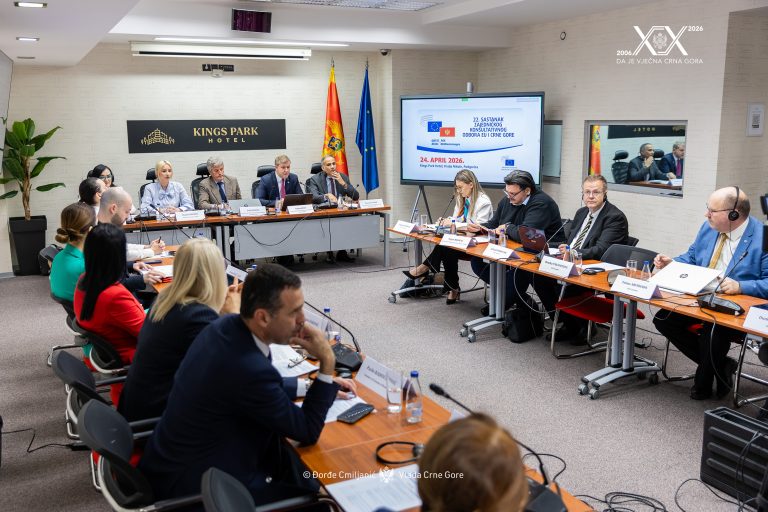
Members of the ZKO will also discuss the situation in Chapter 19: Social Policy and Employment. On this topic, views will be exchanged by the Minister of Labour, Employment and Social Dialogue Naida Nišić, as well as members of the negotiation structure, trade union representatives, and NGO sector representatives: Marko Ćipović (Deputy Head of the Working Group), Ivana Mihajlović (Union of Free Trade Unions), Rumica Kostić (Union of Employers), Tatjana Džudović (Union of Free Trade Unions), Marina Vujačić (NGO UMHCG), and Dumitru Fornea (EU).
The meeting will also address the coordination of structural instruments and preparations for the next Multiannual Financial Framework, as well as a review of the situation of civil society in Montenegro. On this topic, the following will present their views: Bojan Vujović (Director General at the Ministry of European Affairs), Melanie Bride (EU Delegation in Montenegro), Monika Panayotova (EU), Liselotte Isaksson (EU Delegation in Montenegro), Zorana Marković (NGO CRNVO), Daliborka Uljarević (NGO CGO), and Kristina Mihailović (Parents Association).
A joint declaration will be adopted at the meeting and forwarded to the Stabilisation and Association Committee, the Parliamentary Stabilisation and Association Committee, the European External Action Service, the European Commission, and the Government of Montenegro.
MINISTRY OF EUROPEAN AFFAIRS